Wordmark anatomy with callouts
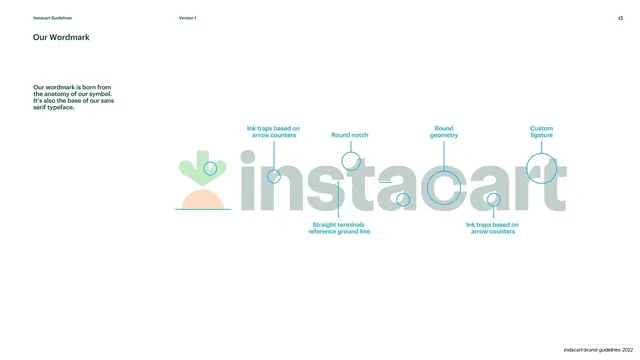
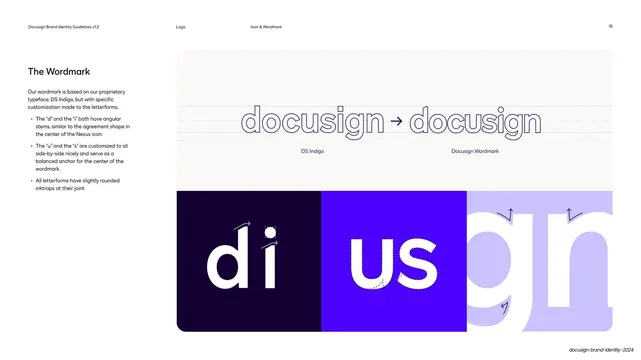
White slide with blue callouts on a faded wordmark that point out its ink traps, round notches, straight terminals and custom ligature.
Summary
A white slide that annotates the wordmark with blue callouts for its custom letterform details, linked back to the symbol's anatomy.
Visual description
The background is white. The wordmark is drawn in a faded grey-green across the middle, with a faded version of the carrot at left and its ground line beneath. Thin blue circles and leader lines call out ink traps based on arrow counters, a round notch, round geometry in the c, a custom ligature, and straight terminals that reference the ground line. A dark green text column at left says the wordmark is born from the anatomy of the symbol and is the base of the sans-serif typeface.
Key takeaway
The callouts show that the type design comes from the symbol's geometry, which is the strongest argument for the wordmark's consistency. Fading the wordmark keeps the annotations readable.
Reuse notes
Use when a guideline needs to explain how a custom wordmark was drawn. The faded-letterform and blue callout approach suits any anatomy slide. Limit the callouts to the details that matter for reproduction.
More like this
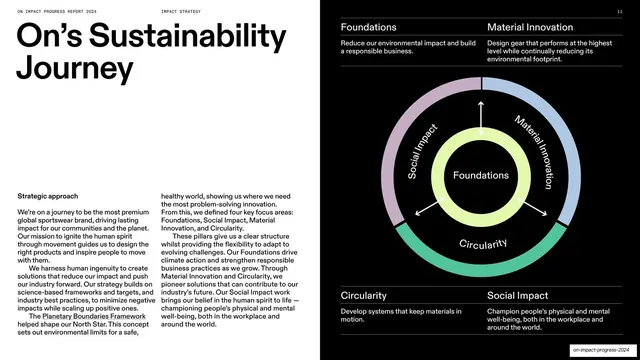 On four-pillar strategy with circular diagram
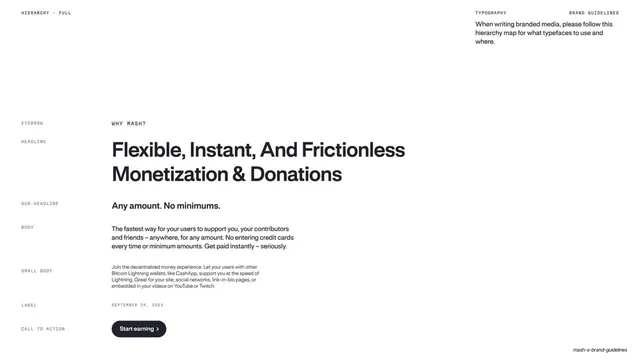 Mash type hierarchy full specimen
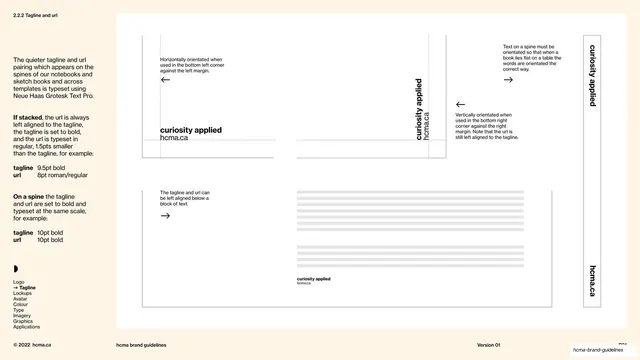 Tagline and url placement
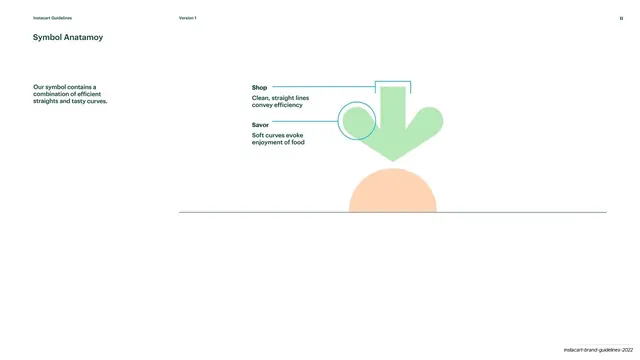 Symbol anatomy straight lines and curves
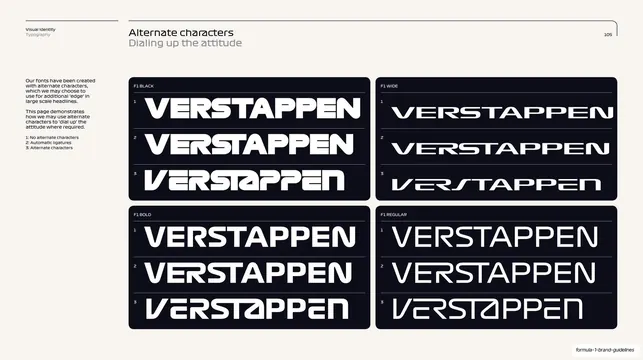 Alternate characters - dialing up the attitude
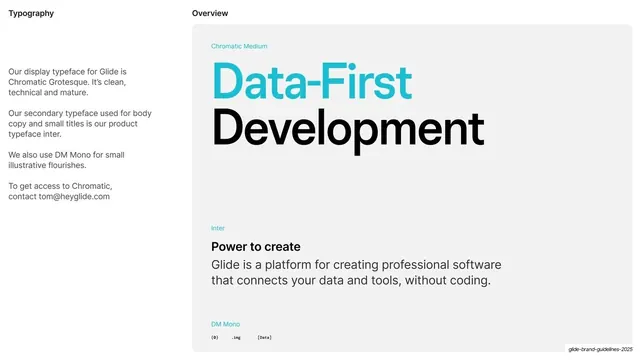 Typography overview specimen
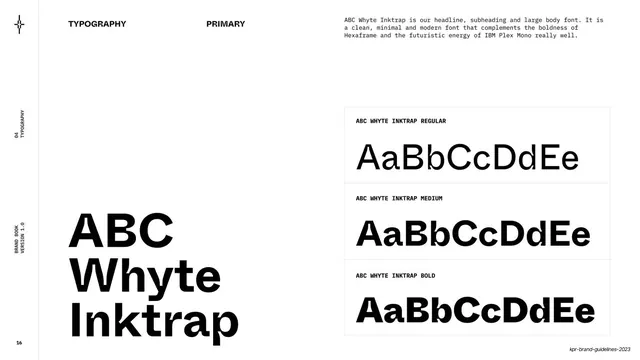 Primary typeface - ABC Whyte Inktrap
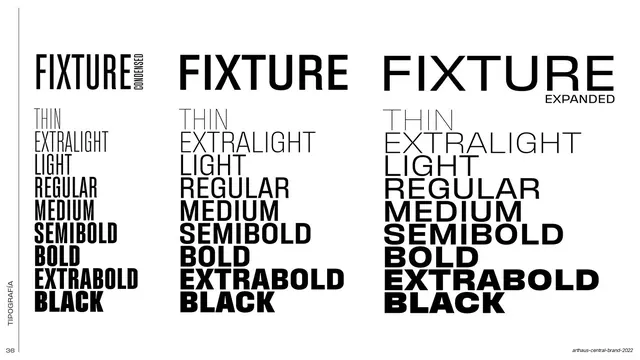 Fixture family weights across three widths
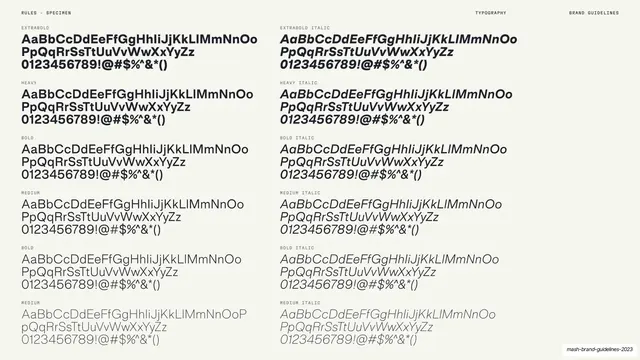 Mash Rules weights and italics specimen
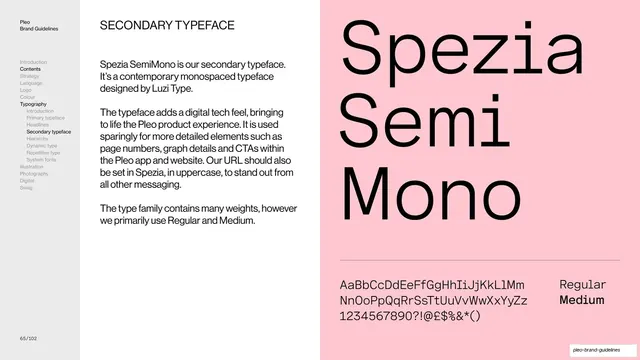 Secondary monospace typeface specimen
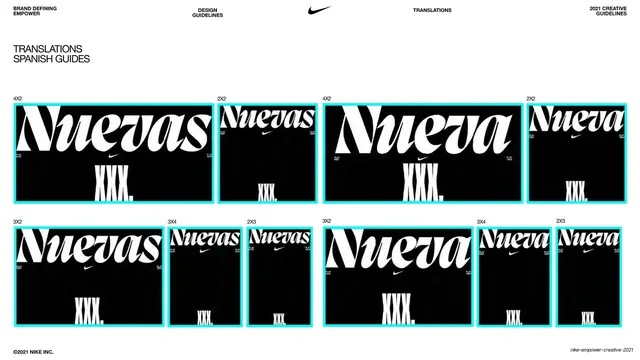 Spanish masthead guides
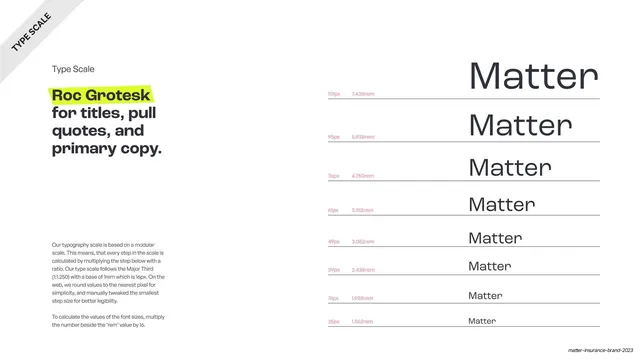 Roc Grotesk type scale
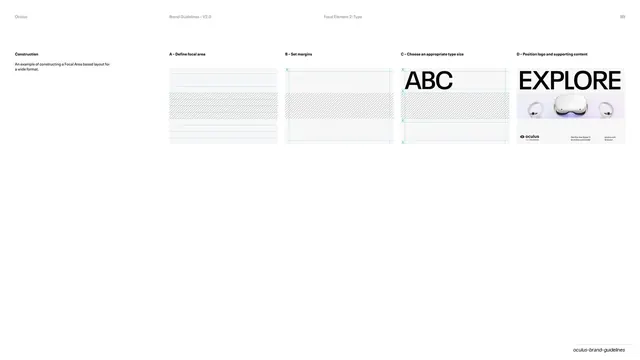 Wide format focal area construction steps
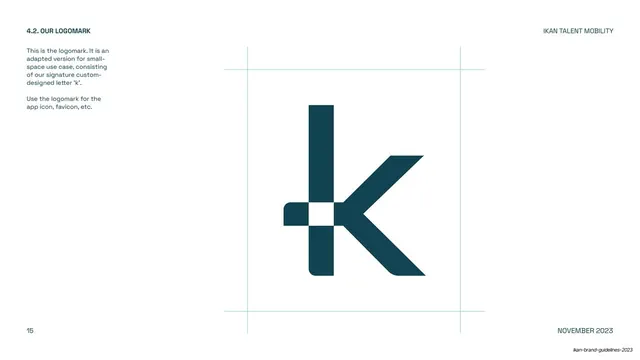 IKAN logomark construction
 Monzo magic photo treatment steps
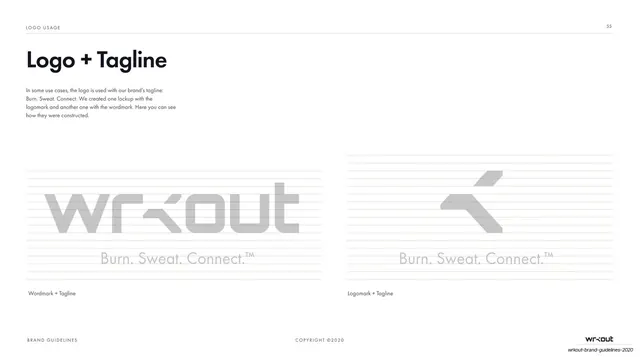 Wordmark and logomark tagline construction grids
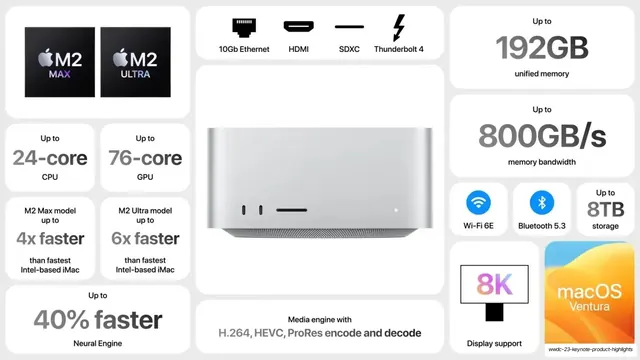 Mac Studio spec bento
 Galaxy's Sustainability Program
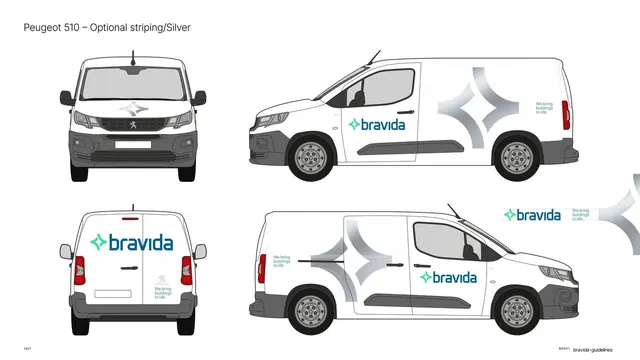 Peugeot van optional silver striping
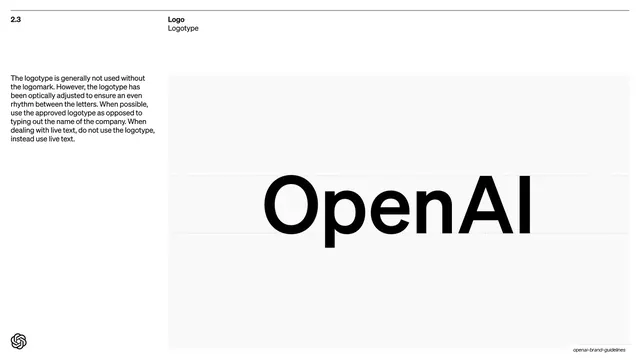 Logotype usage on light panel
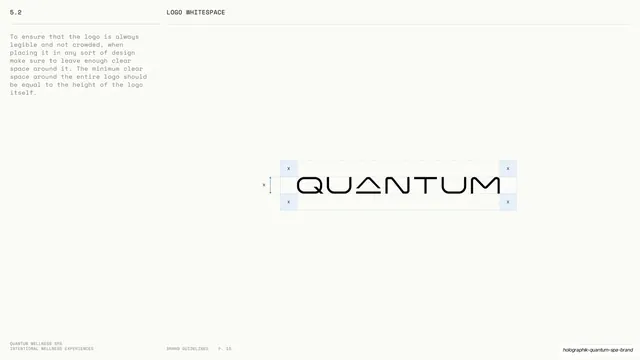 Wordmark clear space rule
 DocuSign wordmark construction
 Control Upright product voice weights
 Great expectations vs reality comparison spread