Food and drink section divider
Full-bleed section divider for the food and drink category, with large green numerals and wavy line art on a yellow-to-pink gradient.

Summary
Full-bleed section divider for the food and drink category, with large green numerals and wavy line art on a pastel gradient.
Visual description
A full-bleed pastel gradient runs from pale yellow on the left to pink on the right. Two large textured green numerals, "41" at the top left and "50" at the lower right, frame the page. A wide, tracked black all-caps title, "FOOD & DRINK," sits near the center. A tall, dense field of green line art flows up through the middle of the page. No body copy appears on this page.
Key takeaway
A bold category title on a plain gradient gives readers a clear entry point, and the line art adds motion without clutter. The two numerals balance the page diagonally.
Reuse notes
Use as a divider between major sections of a report, especially where the category changes. The pastel palette offers a lighter alternative to the coral chapter openers. Keep the title short so the line art has room to breathe.
More like this
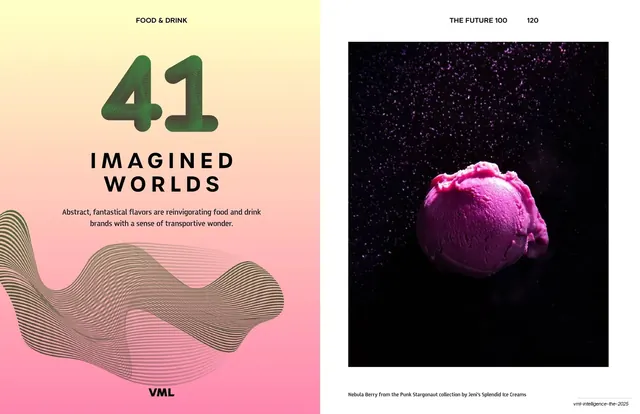 Chapter opener: Imagined Worlds
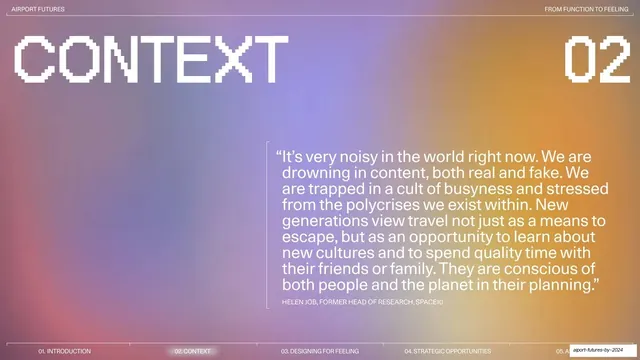 Context section divider with quote
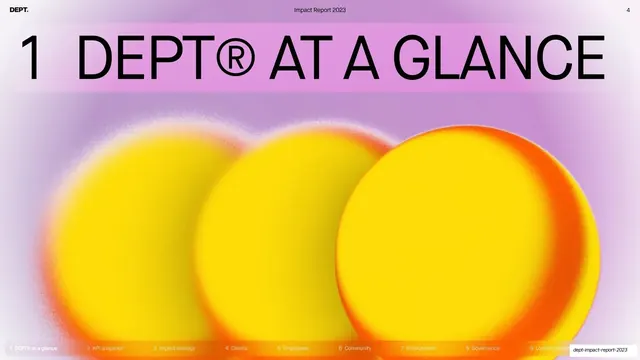 Section opener with overlapping yellow spheres
 AI glint in the eye section divider
 Be Human pillar section opener
 Iridescent cover with ring and wordmark
 Section divider 3.5 Impact strategy
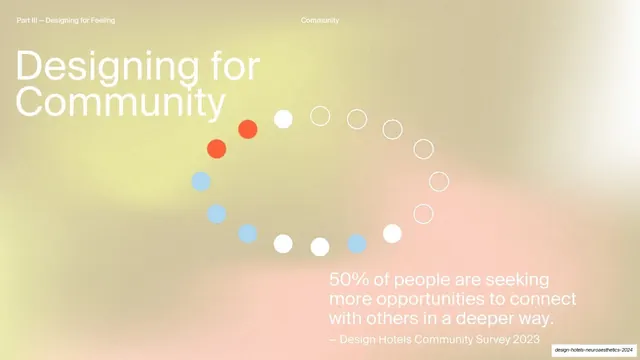 Designing for Community section opener
 Trend 04 section divider with yellow 3D blob
 Micro-Trend 2 section divider
 Productivity section divider
 Textural evolution orange section opener
 Typography section intro with line pattern
 Application section divider over blurred color
 Section opener 2.0 Materials
 New creative world order statement
 Gradient cover with blob lettering
 Methodology section divider with chrome forms
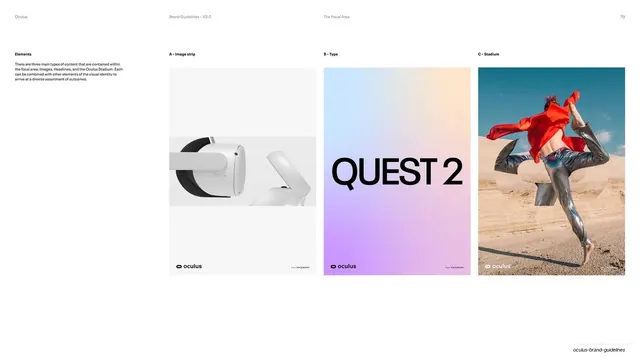 Focal area examples with Quest 2 and stadium crop
 Key findings section divider in lavender
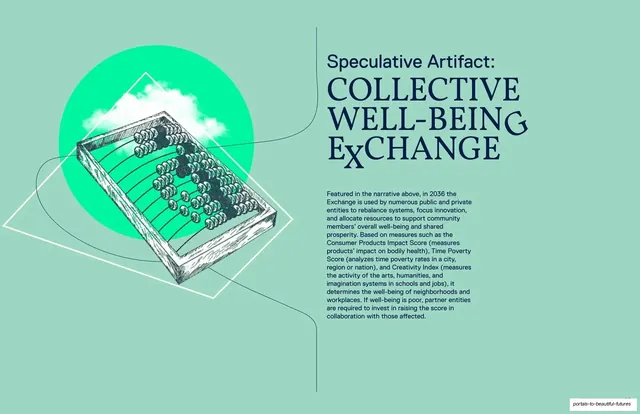 Collective Well-Being Exchange speculative artifact
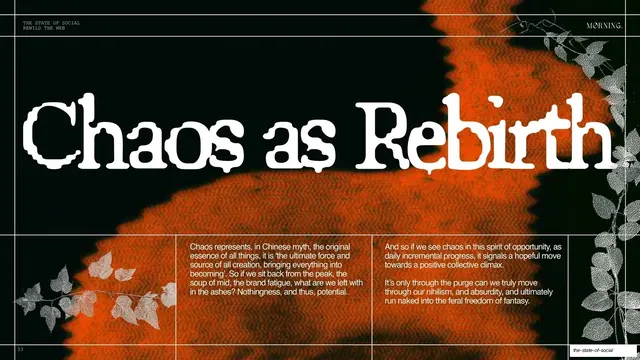 Oversized white title over orange smoke texture
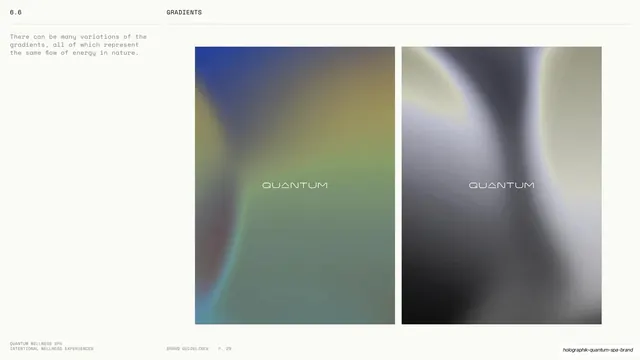 Multi-hue gradient blends in two panels
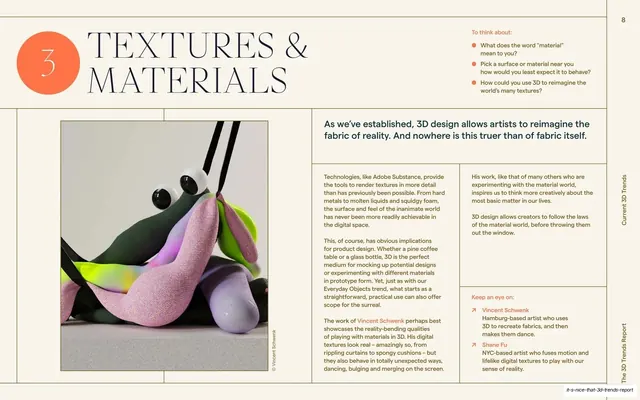 Textures and materials case study with creature