Contents grid of five numbered sections, part two
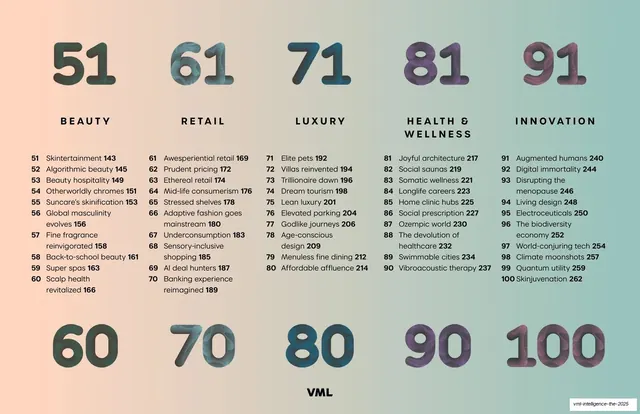
Second table-of-contents spread: five columns with large striped numerals in cool and warm tones, each followed by a numbered list of trends.
Summary
The second contents spread, with five columns of oversized striped numerals, tracked section names and numbered trend lists for beauty, retail, luxury, health and innovation.
Visual description
The background is the same peach-to-teal gradient used on the first contents page. Each column carries a two-digit numeral in its own colour, with pink, slate teal, grey-green, plum and purple among them. Section headings sit in letterspaced caps beneath, and numbered entries follow in a light sans-serif with page references. The VML mark sits centered at the bottom, and the layout matches the preceding contents page so the two read as a pair.
Key takeaway
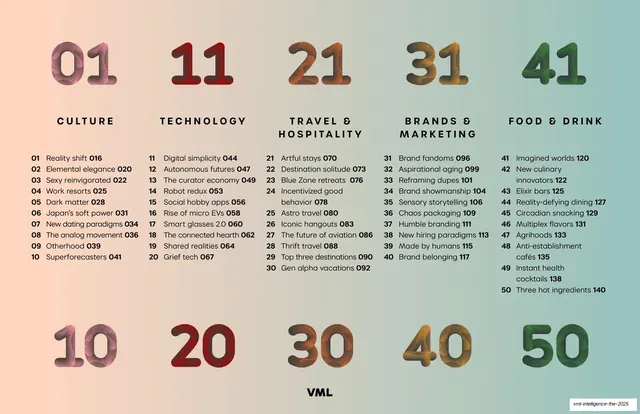
Repeating the same column grid across consecutive contents pages makes a long index feel like one system. Colour does the job of differentiating sections while the structure stays constant.
Reuse notes
Use alongside its paired contents page when an index runs across two spreads. The five-column arrangement is dense, so entries should stay one or two lines each. Keep the numeral colours tied to sections to aid scanning.
More like this
 Contents grid of five numbered sections
 DEPT Impact Report 2023
 Gharage Airport Futures 2024
 Table of Contents gradient cards
 WeTransfer Ideas Report 2021
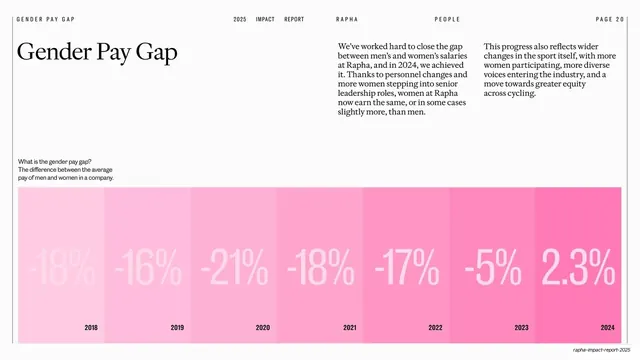 Gender pay gap strip chart
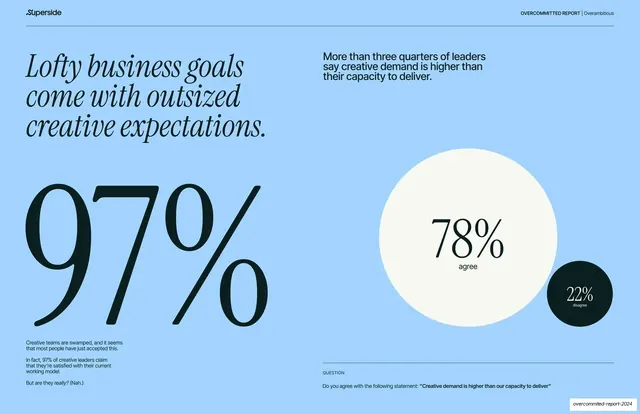 Stat page with 97 percent and 78 percent circle
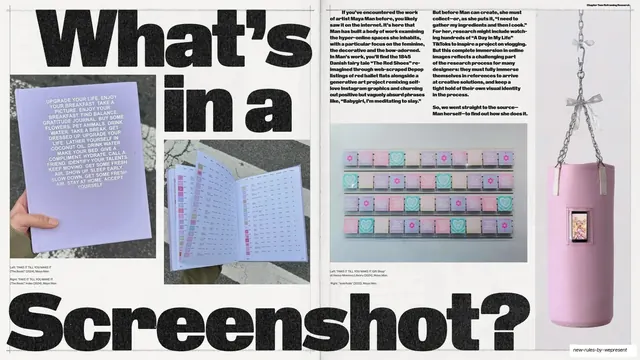 Question headline with pastel photo set
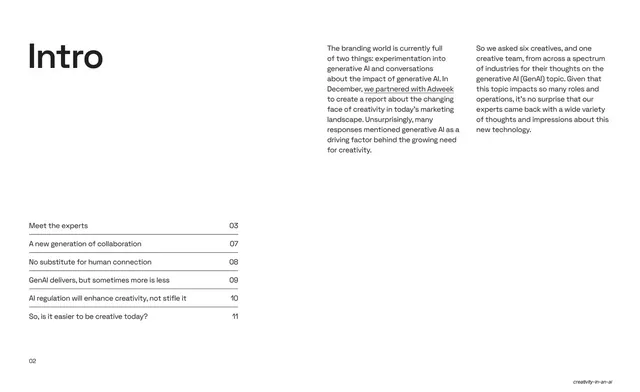 Intro and contents
 PANGAIA Impact Report 2021
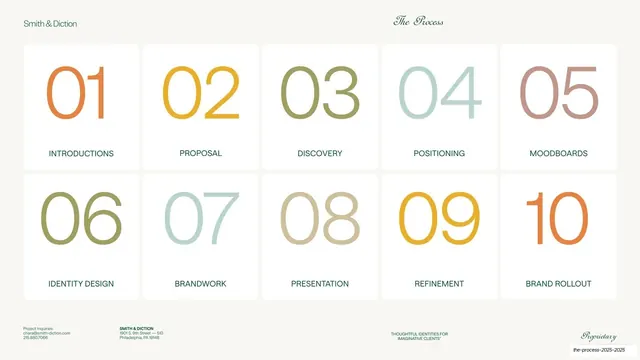 Ten-step process overview grid
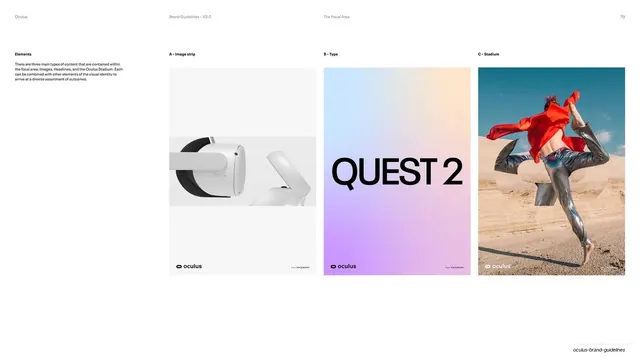 Focal area examples with Quest 2 and stadium crop
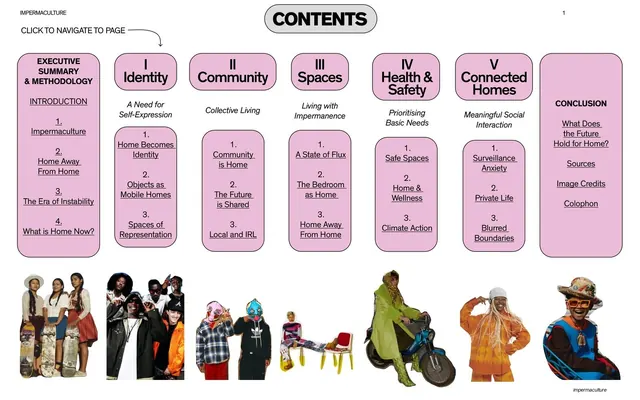 Impermaculture interactive contents
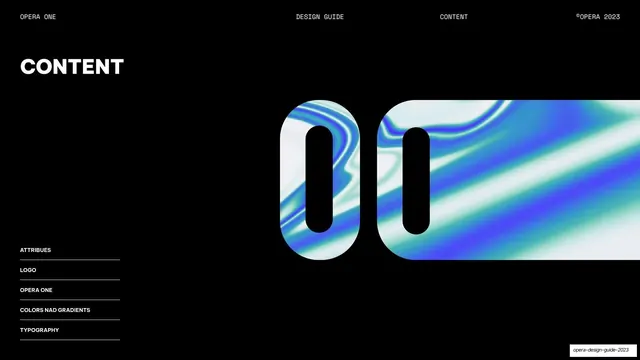 Content index
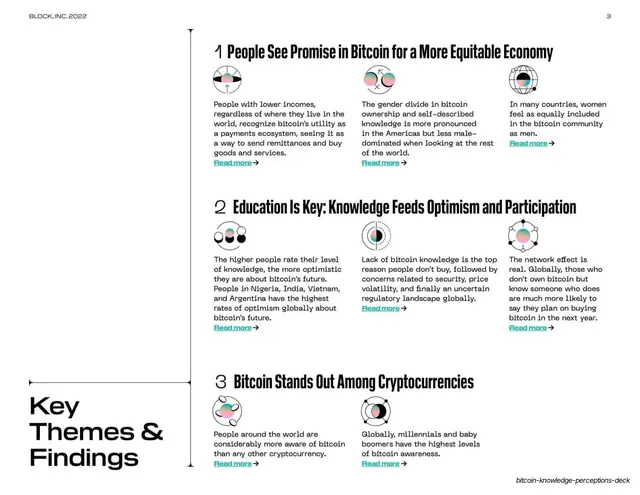 Key Themes and Findings agenda grid
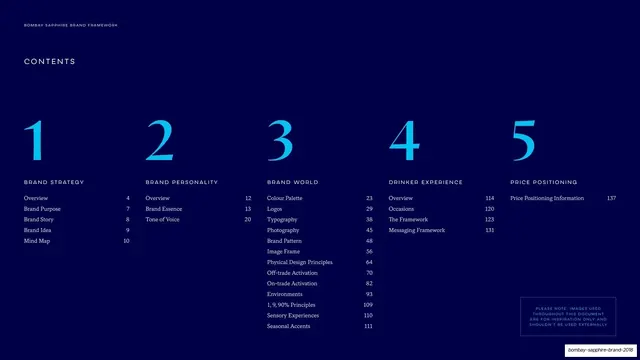 Five-section table of contents on navy
 Contents page with three numbered parts
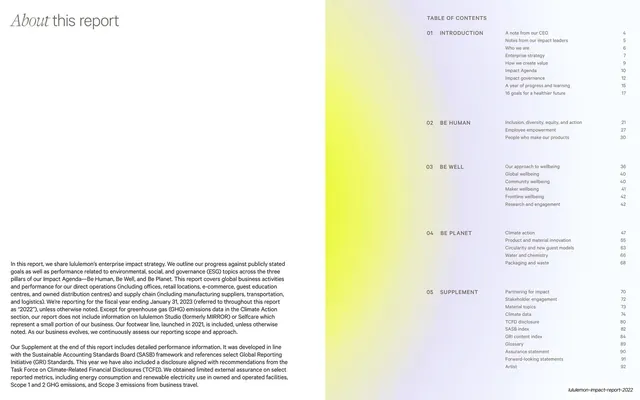 About this report and table of contents
 WeTransfer Ideas Report 2020
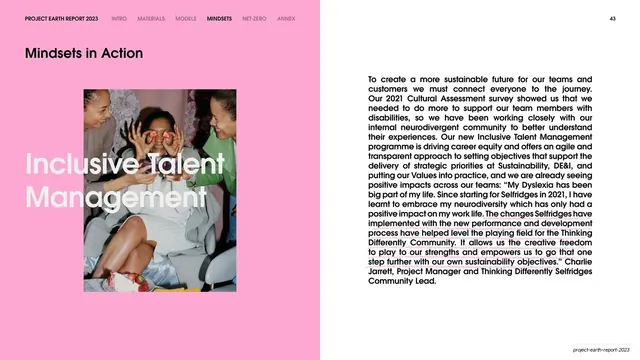 Inclusive Talent Management feature spread
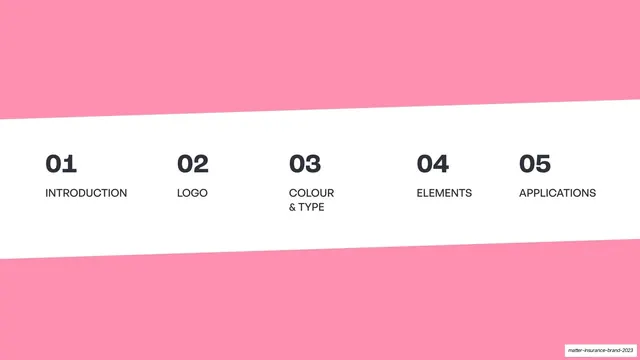 Five-section contents row on banded background
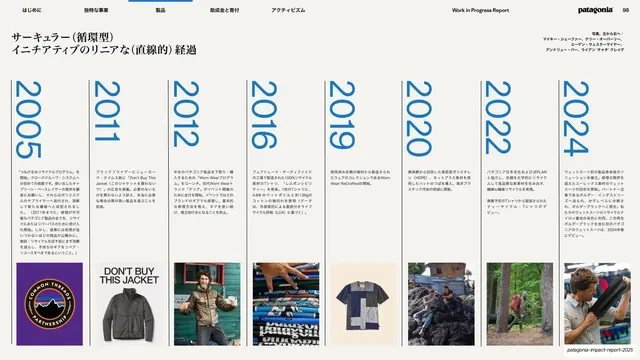 Circularity timeline 2005 to 2024
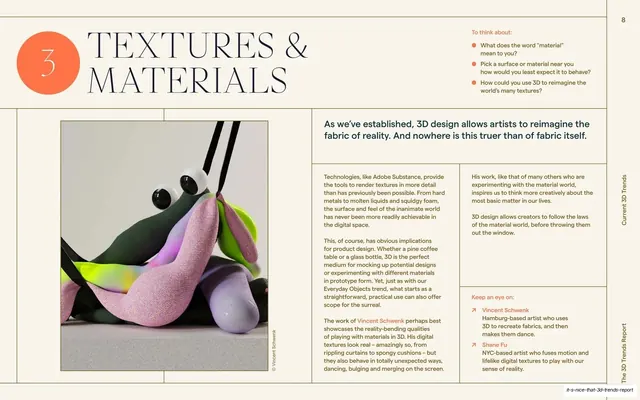 Textures and materials case study with creature
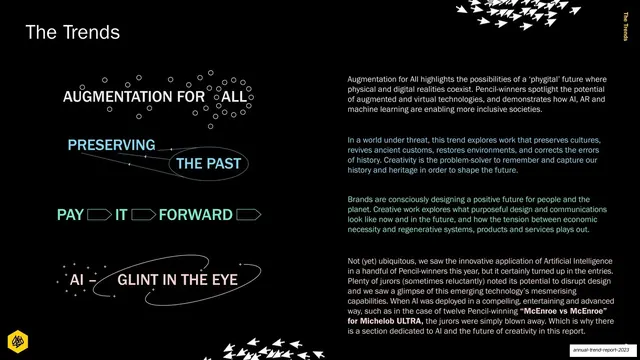 The Trends overview with four wordmarks