Brand and supporting colour specifications
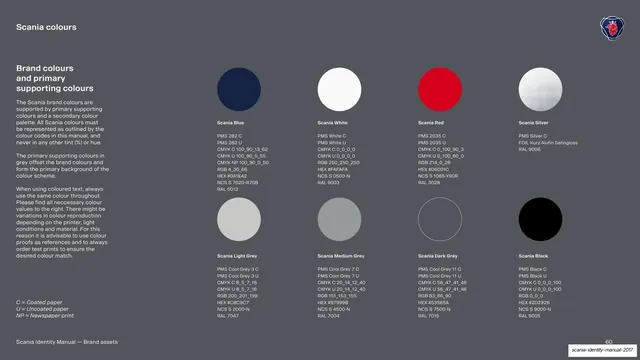
Colour specification grid with eight round swatches and matching PMS, CMYK, RGB, HEX, NCS and RAL values for each colour.
Summary
A colour specification page that lists eight brand and supporting swatches, each with its print, screen and colour-system values.
Visual description
Mid-grey background with a "Brand colours and primary supporting colours" heading and an explanatory paragraph on the left, plus a key for coated, uncoated and newspaper print at bottom left. The right side is a grid of eight circular swatches in two rows of four: Scania Blue, White, Red and Silver in the top row, then Light Grey, Medium Grey, Dark Grey as an outline circle, and Black. Under each swatch is a stack of small white text giving PMS, CMYK, RGB, HEX, NCS and RAL values for each colour.
Key takeaway
Every colour gets the same ordered specification stack, so a printer or developer can find values without guessing. Two rows of four keep the reference scannable.
Reuse notes
Use as a reference page for a brand palette that must work in print and on screen. The consistent spec stack is a useful template for any colour table. The small type is best read on a larger screen.
More like this
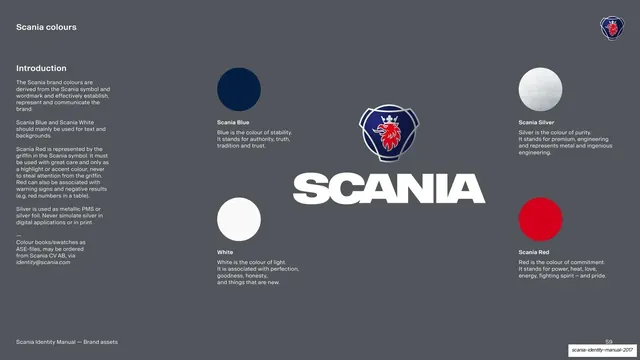 Scania colour introduction and symbolism
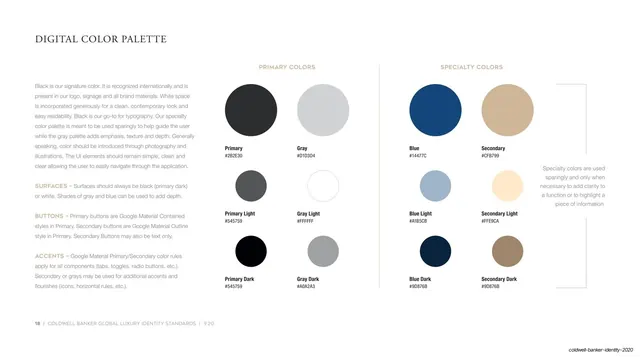 Digital UI palette with usage rules
 Tesla Impact Report 2024
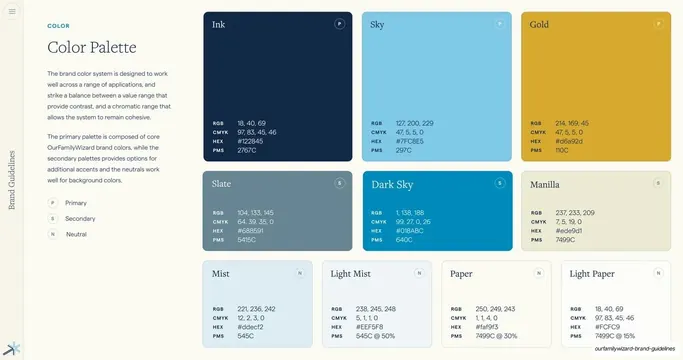 Color Palette swatch grid
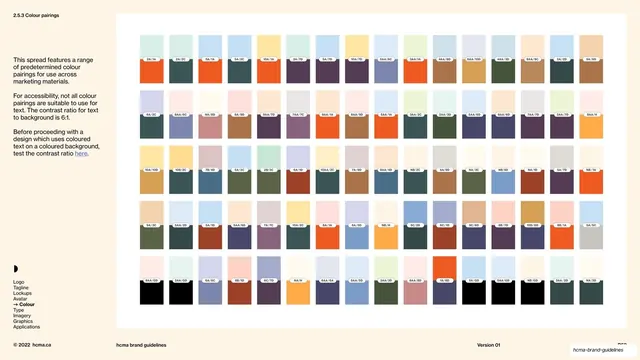 Colour pairings
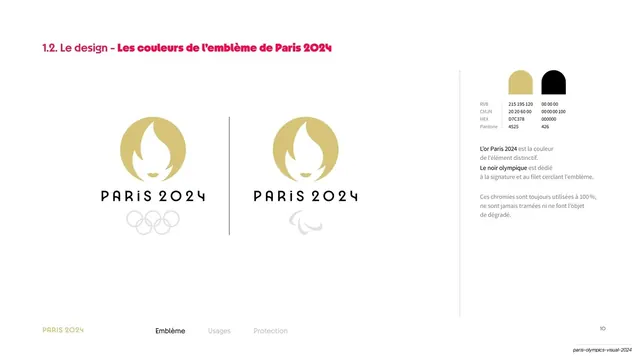 Emblem gold and black color specifications
 United Arrows Integrated Report 2023
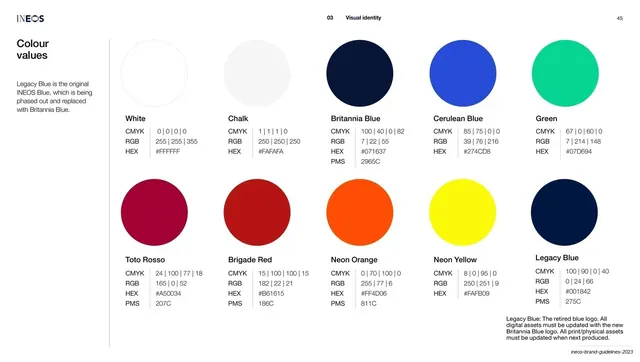 Colour values sheet with CMYK, RGB and HEX
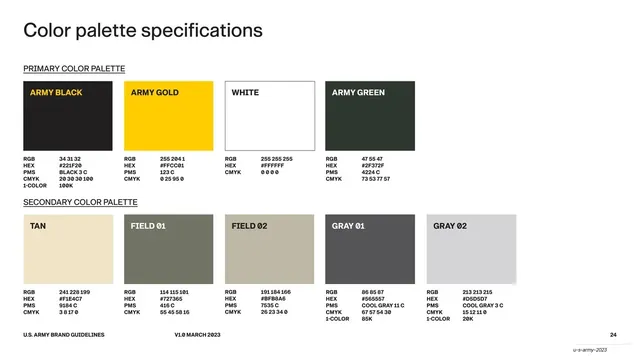 Color palette specification table with swatches
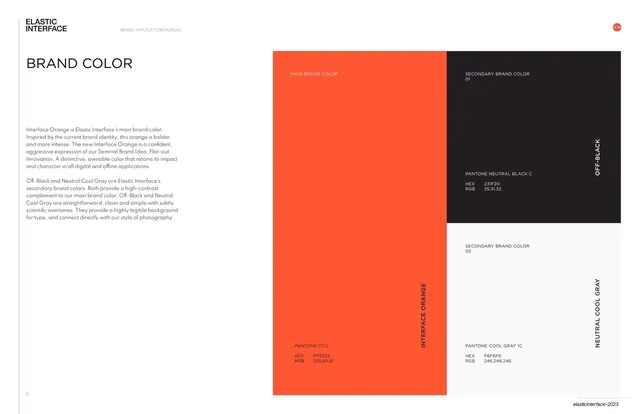 Brand palette with HEX values
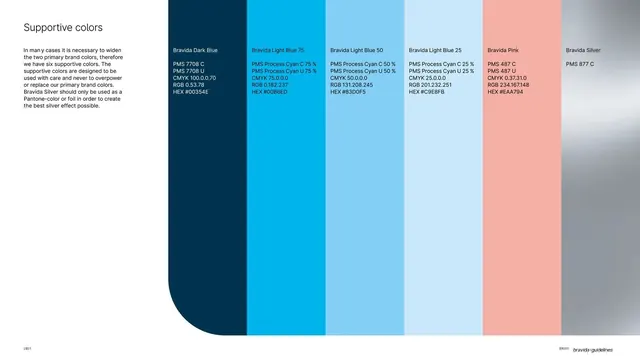 Supportive colors six-swatch row
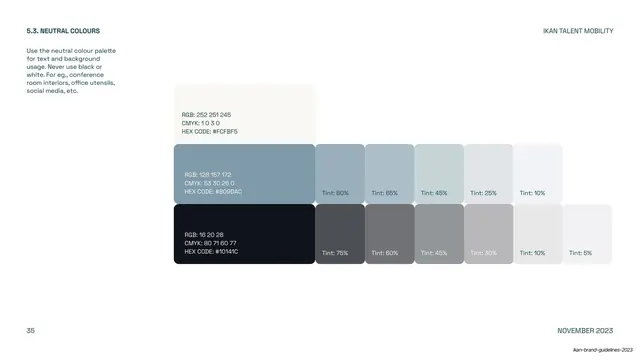 IKAN neutral colours
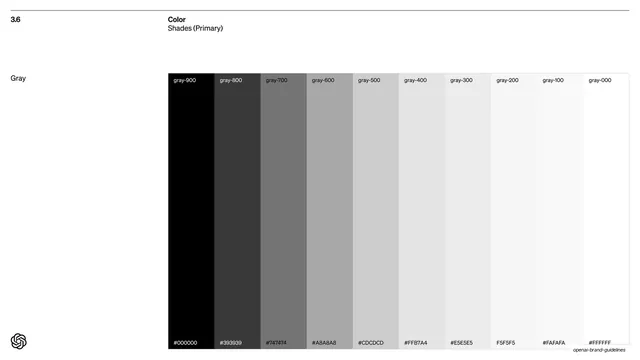 Primary gray scale, gray-900 to gray-000
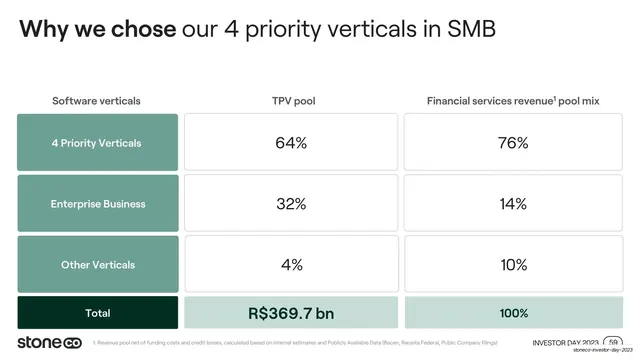 Pool share table for priority verticals
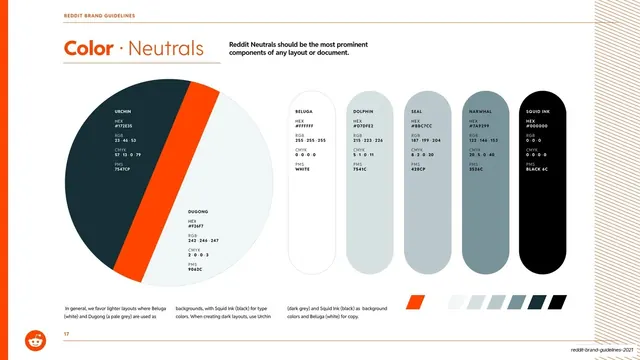 Neutral palette with pie chart and swatches
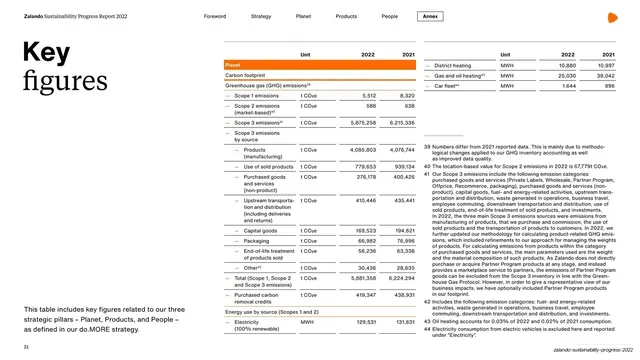 Key figures Planet emissions annex table
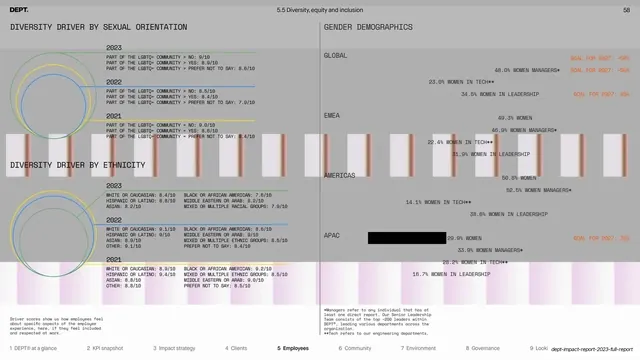 Diversity scores by orientation and gender demographics
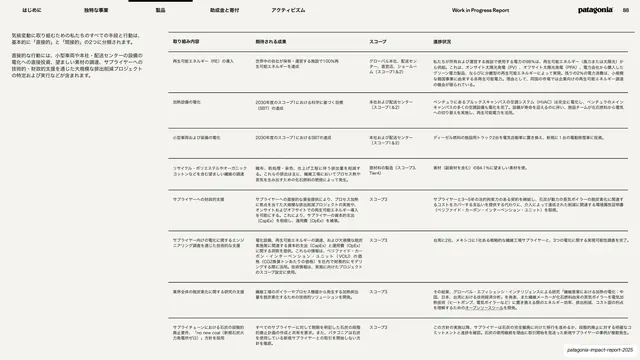 Mitigation actions progress table
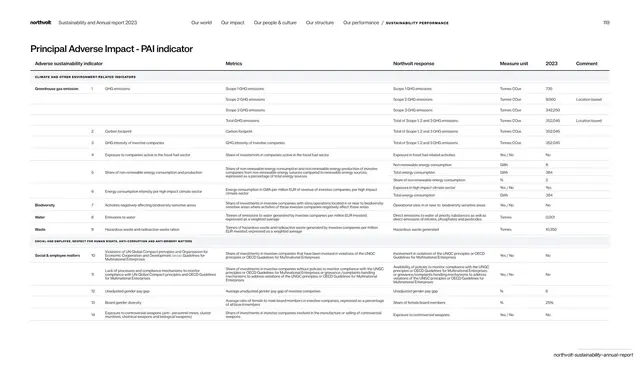 Principal adverse impact indicator table
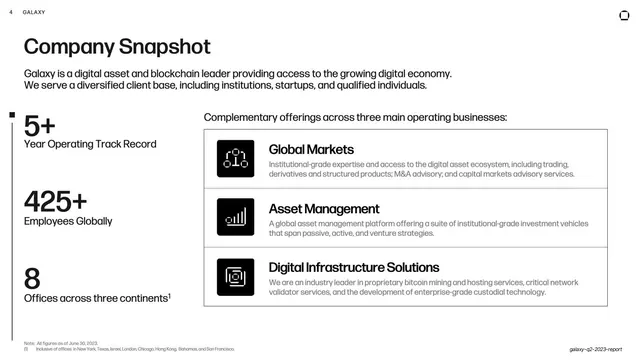 Company snapshot
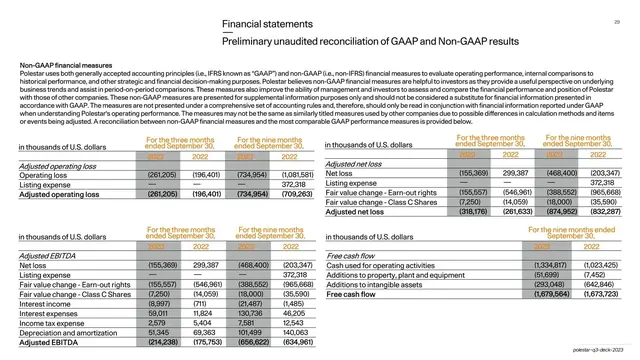 GAAP and non-GAAP reconciliation tables
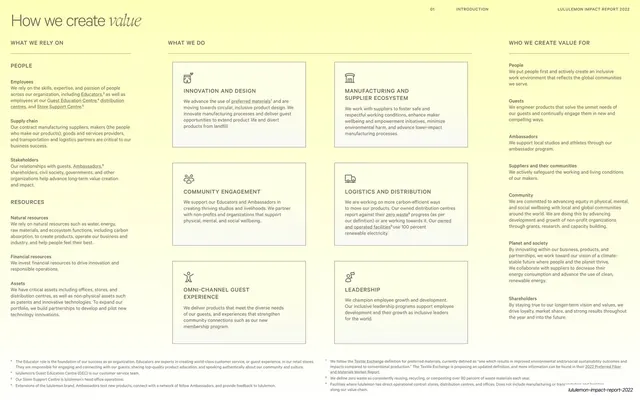 How we create value three-column model
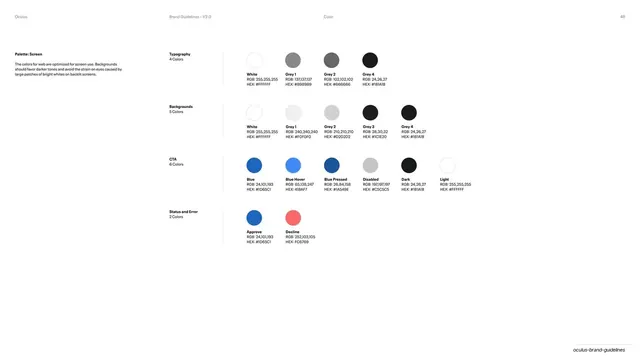 Screen palette for backgrounds and CTAs
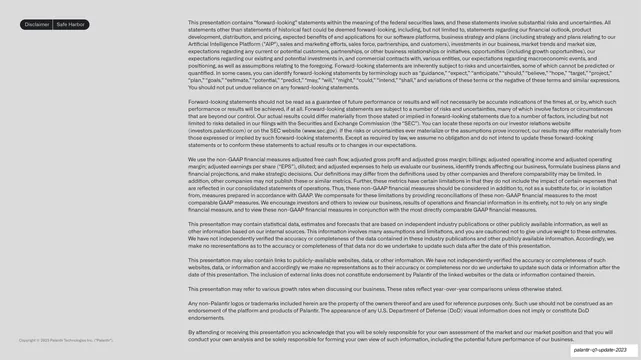 Forward-looking statements and Safe Harbor