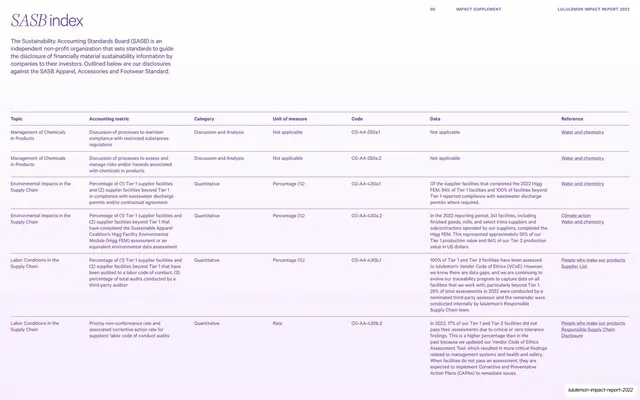
SASB supply-chain disclosure table continued
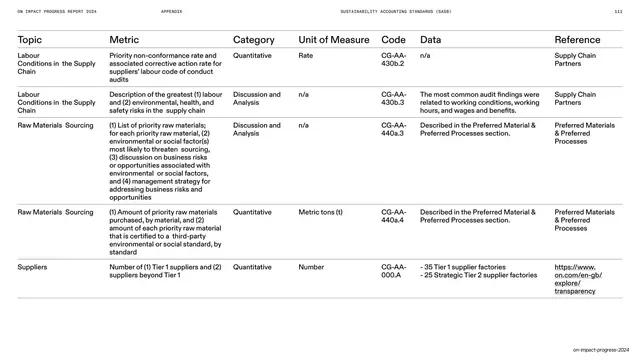
Continuation of the SASB table on white, a seven-column grid of labour and raw-material disclosures with codes, units and data.
Summary
A second page of the SASB table on white, no headline this time, carrying the same seven-column grid (Topic, Metric, Category, Unit of Measure, Code, Data, Reference) of labour-conditions and raw-material-sourcing disclosures.
Visual description
White full-bleed with the monospace utility header along the top. The page opens directly into the column heads, Topic, Metric, Category, Unit of Measure, Code, Data, Reference, on a hairline rule, with no large title since this is a continuation spread. Four wide rows follow, each on its own hairline rule; metric cells carry long wrapping descriptions, Code cells hold short CG-AA standard codes, and one Data cell contains a wrapped web URL. The lower third of the page is empty white. Type is small, left-aligned, and strictly columnar.
Key takeaway
Continuing a long standards table onto a second page by dropping the headline and repeating only the column heads, signaling "same table, more rows" without restating the section. Leaving the page short rather than stretching rows keeps the density humane.
Reuse notes
Use whenever a disclosure or data table overruns one page. Always repeat the header row on the continuation so the columns stay readable out of context. Wrapped URLs in a data cell are fine here but keep them rare so they do not break the column rhythm.
More like this
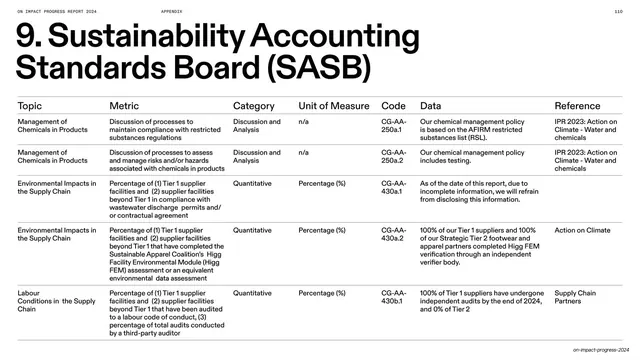 SASB disclosure data table
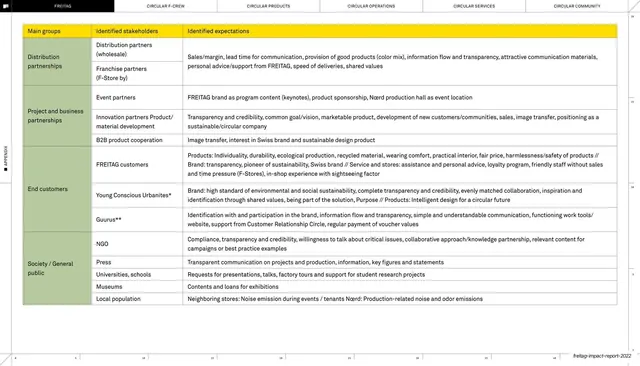 Stakeholder groups and expectations table
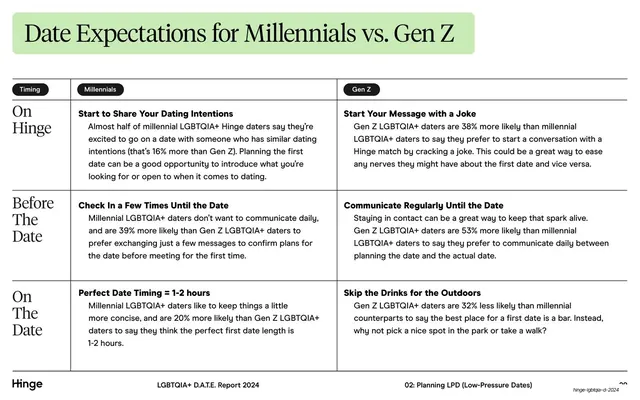 Millennials vs Gen Z expectations table
 SASB index raw materials and activity metrics
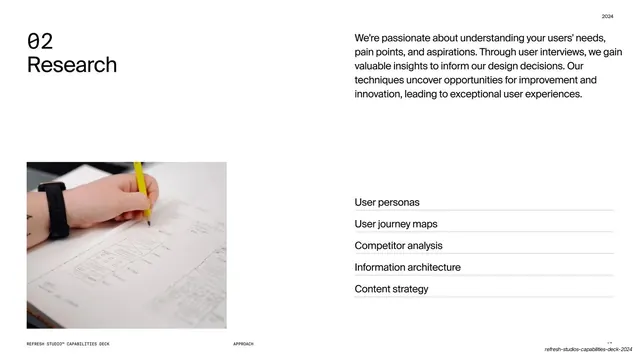 Step 03 - Design
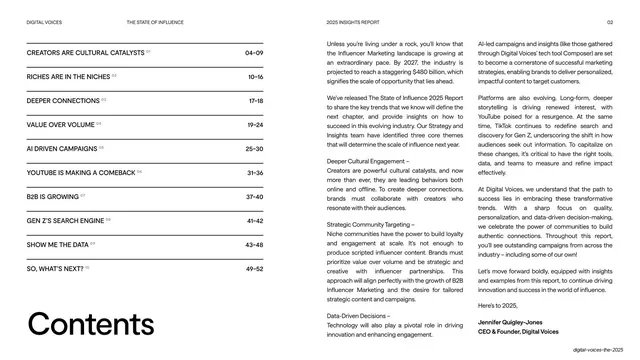 Contents and opening letter
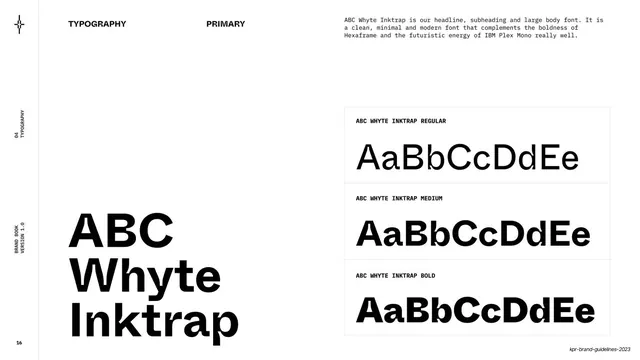 Primary typeface - ABC Whyte Inktrap
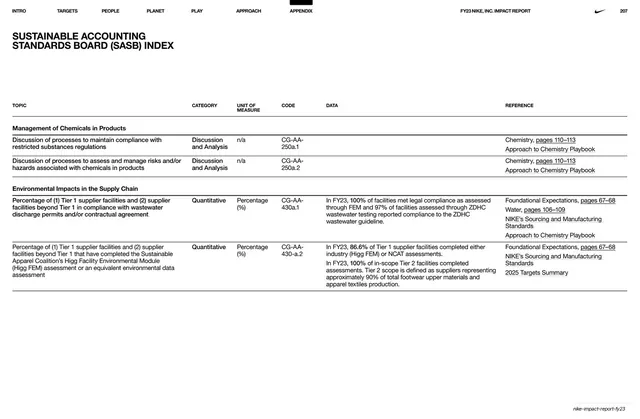 SASB index chemicals and supply-chain impacts
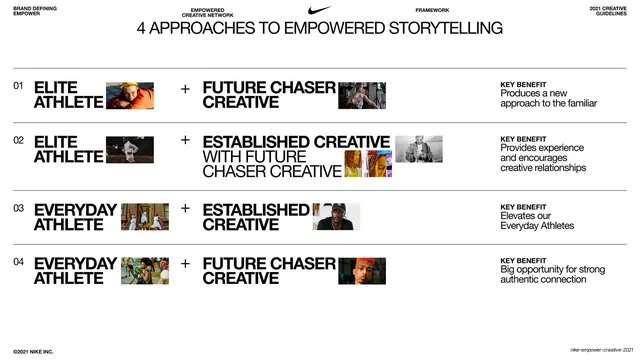 4 Approaches to Empowered Storytelling (summary table)
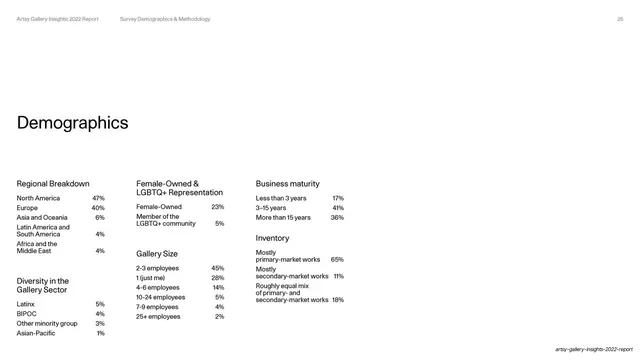 Demographics breakdown
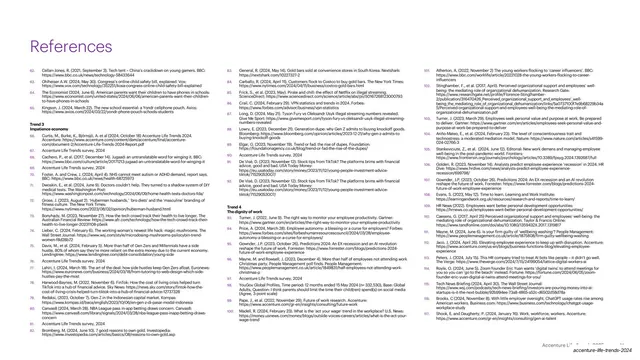 References bibliography page (three-column)
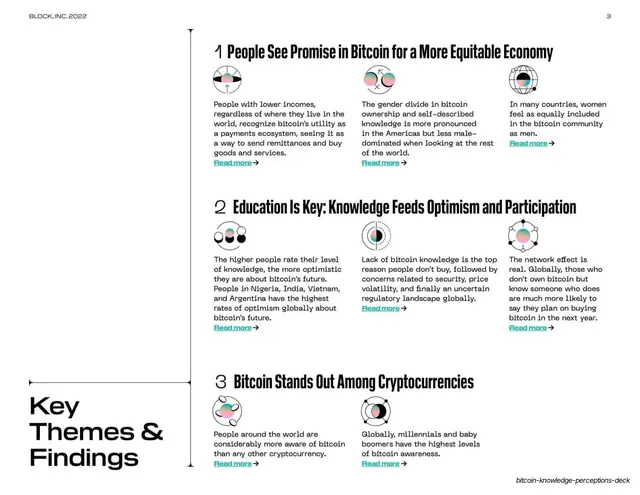 Key Themes and Findings agenda grid
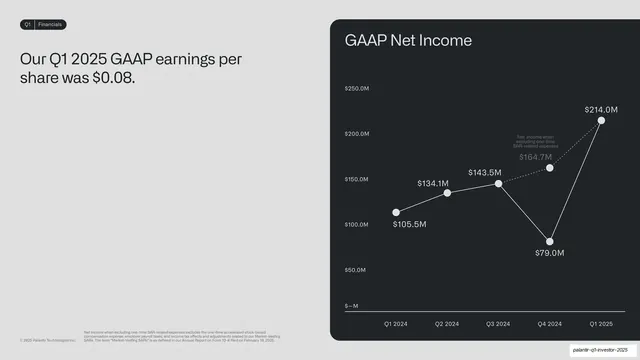 GAAP net income line chart with headline
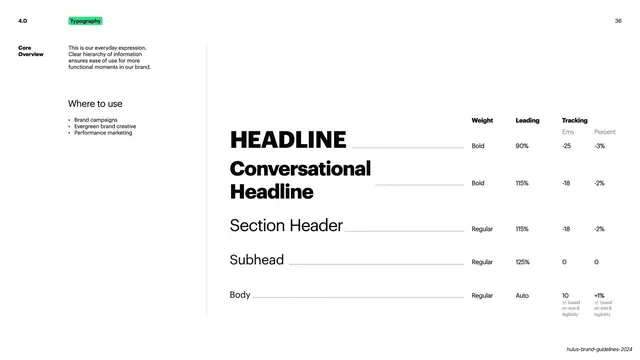 Hulu Core type hierarchy scale
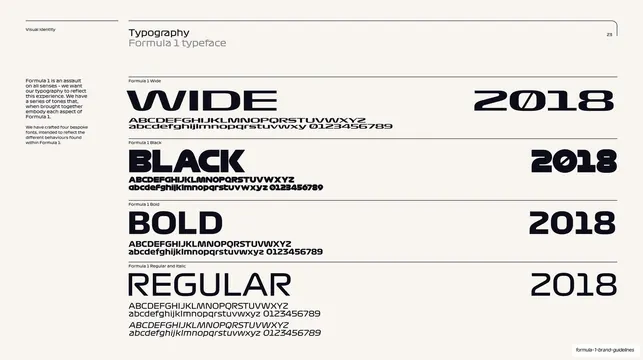 Formula 1 typeface weights specimen
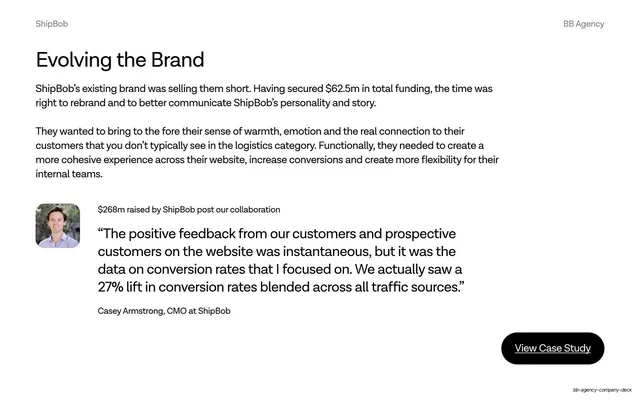 ShipBob results with testimonial quote
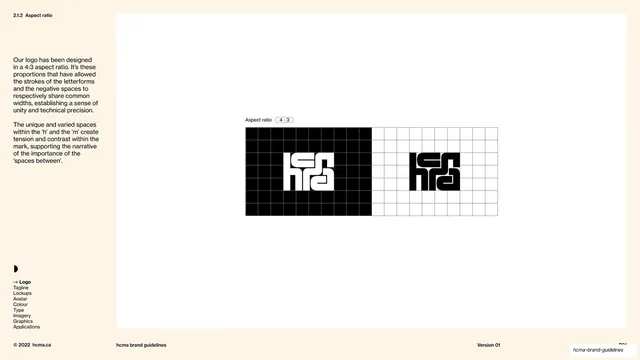 Logo 4:3 aspect ratio grid
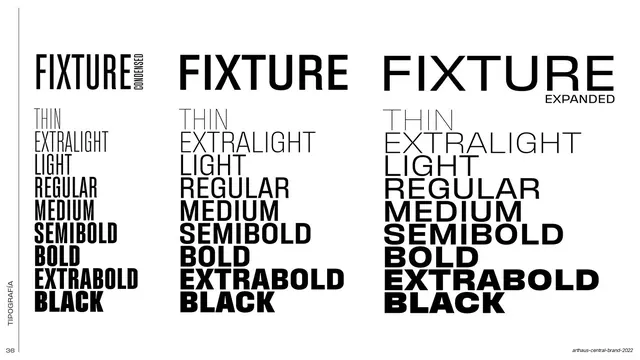 Fixture family weights across three widths
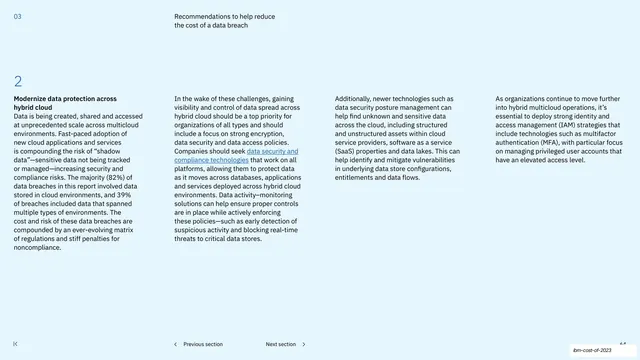 Recommendation 2 four-column body copy
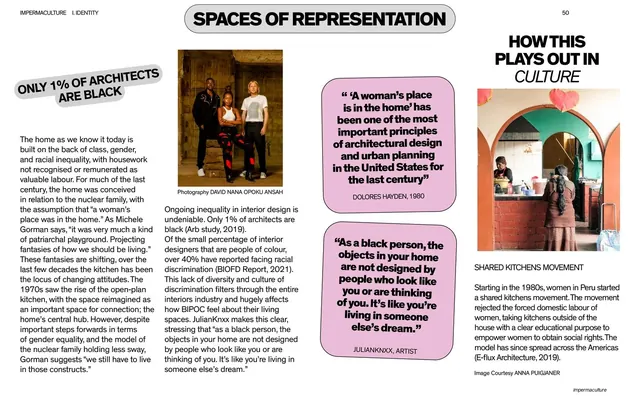 Spaces of representation essay spread
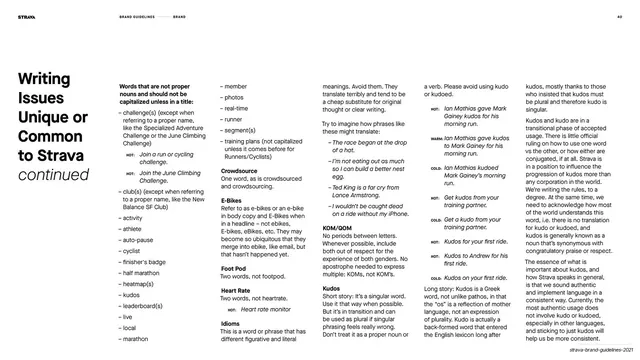 Writing rules for terms and kudos continued
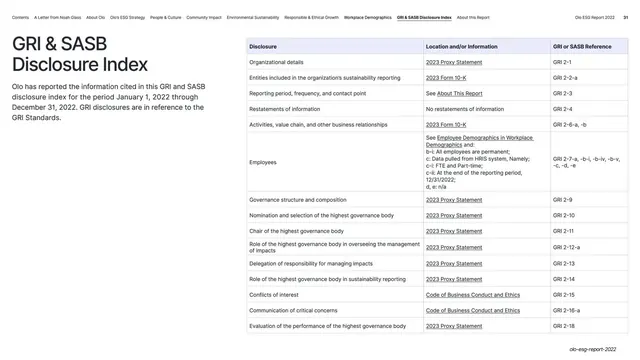 GRI & SASB Disclosure Index table
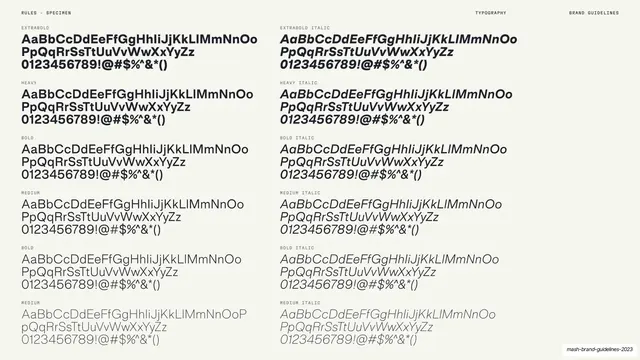 Mash Rules weights and italics specimen
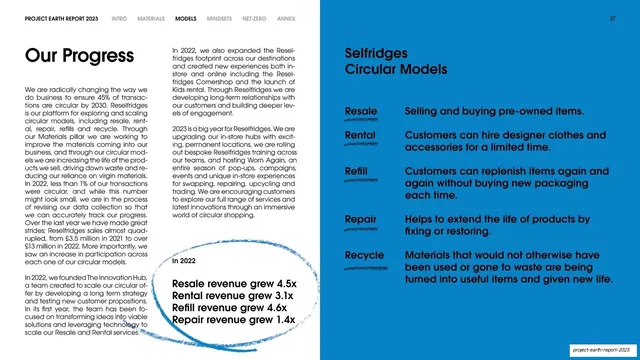 Progress text beside circular models definitions