Common tint gradients from one ring
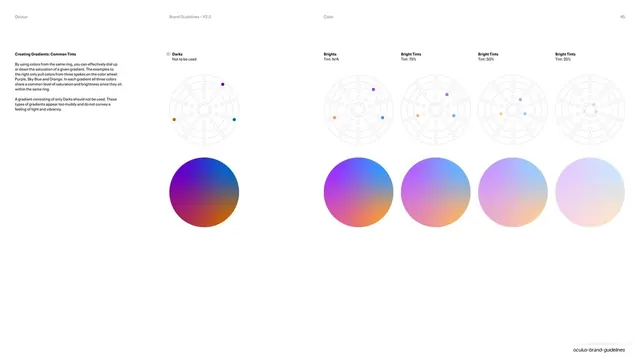
Five gradient studies showing that colors from one ring give consistent gradients, with a Darks-only example marked as not to be used.
Summary
A gradient recipe slide that builds circular gradients from three colors on one ring, and flags the Darks-only version as a failure case.
Visual description
Five columns run across the page beside a short text column. Each column pairs a small wheel diagram with a large gradient circle. The first column is the Darks-only case, marked with a red cross icon and the label Not to be used, and its circle reads as dark purple, navy and burnt orange. The remaining four columns step through Brights and Bright Tints at 75, 50 and 25 percent, with the three marked dots highlighted on each wheel. The circles move from violet and sky blue into softer lilac and peach as the tint drops.
Key takeaway
Gradients built from one ring hold a constant saturation and brightness, and the wheel next to each circle explains why. The Darks-only example makes the failure case visible.
Reuse notes
Use when teaching how to build a gradient from a color system, especially when a do-not-use case sits beside the approved versions. Keep the wheel diagrams small so the gradient circles stay the focus. The circles are illustrative studies rather than product output.
More like this
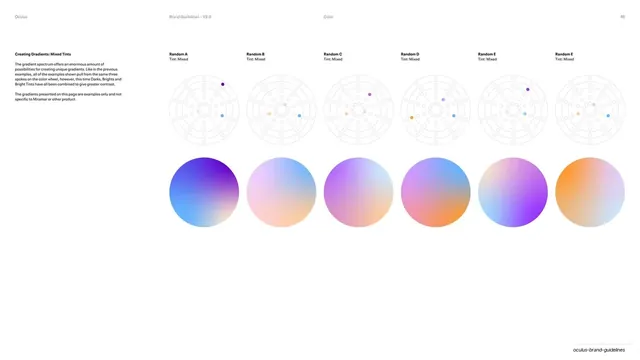 Mixed tint gradient examples A through E
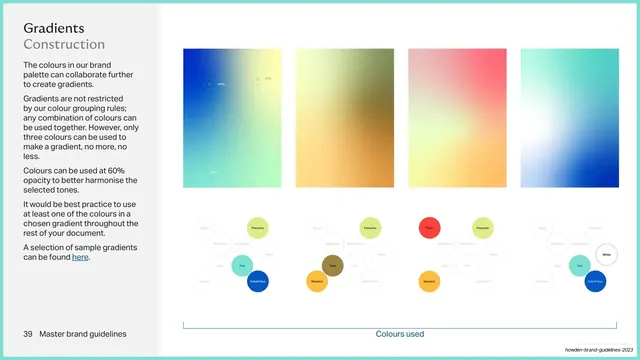 Three-colour gradient construction examples
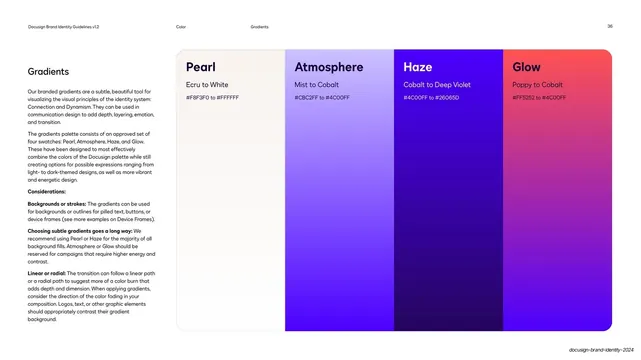 Approved gradients spec panel
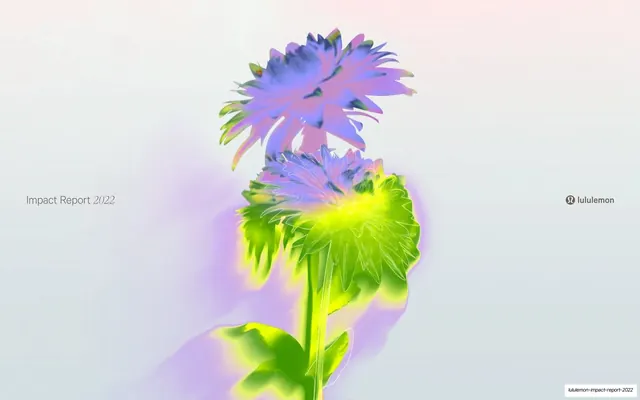 Lululemon Impact Report 2022
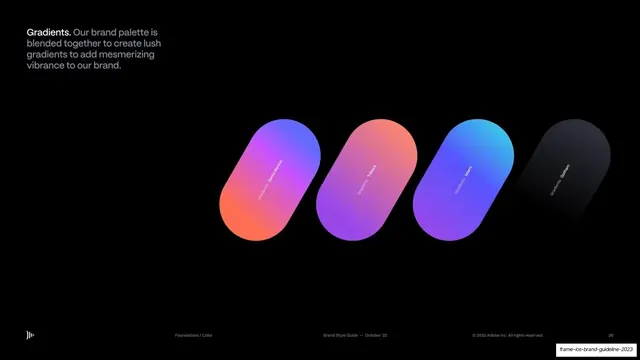 Gradients showcase
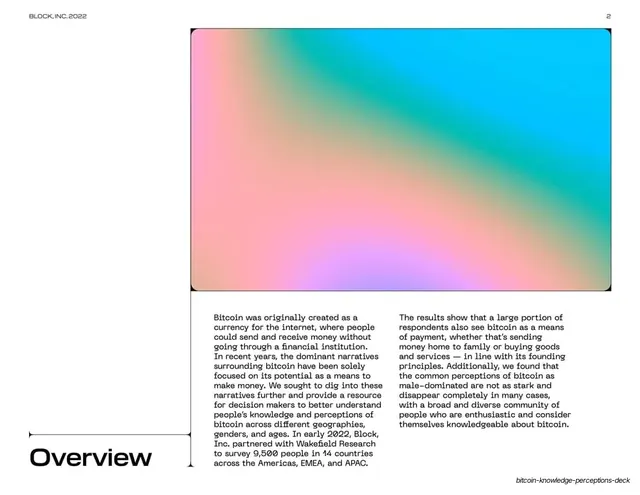 Overview intro with iridescent gradient panel
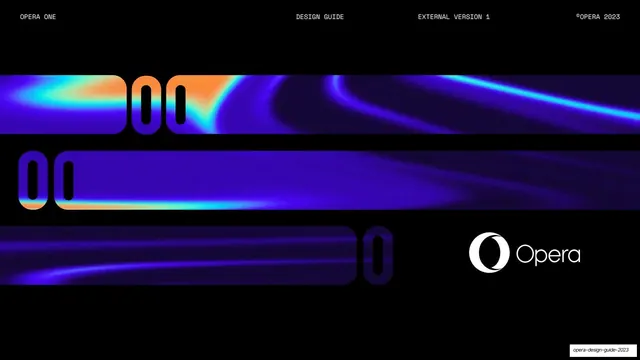 Opera One Design Guide 2023
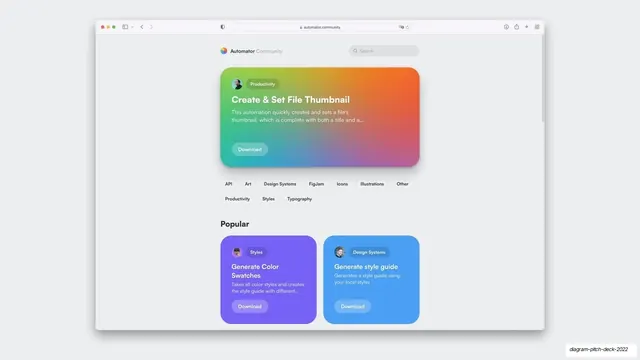 Automator Community website mockup
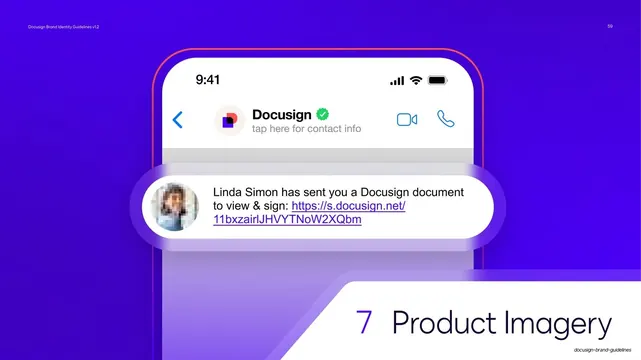 Docusign Product Imagery section opener
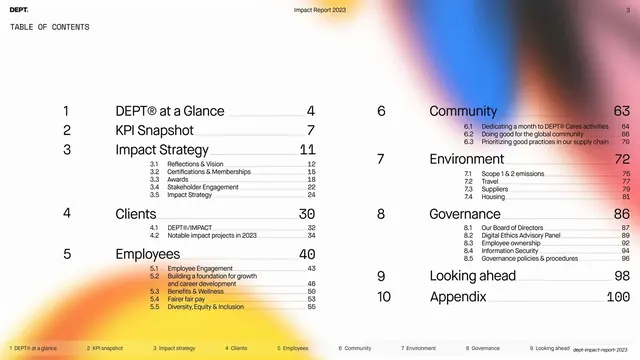 Report table of contents with numbered sections
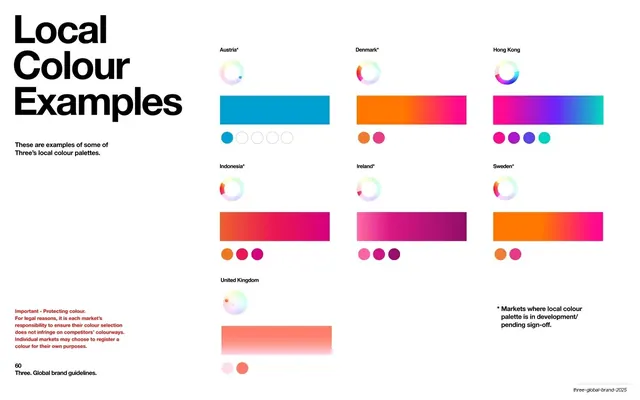 Market local colour palette examples
 Press contact on gradient band
 Blank frame with blue transition band
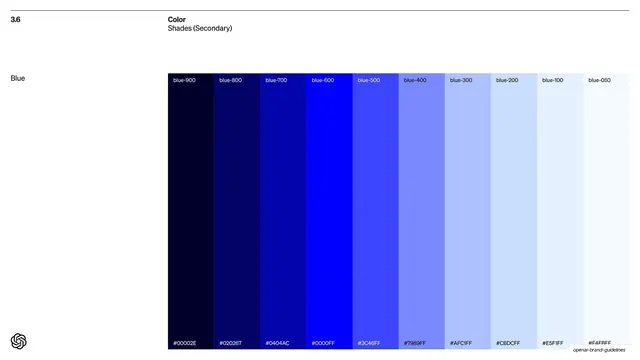 Blue shades, ten-step scale
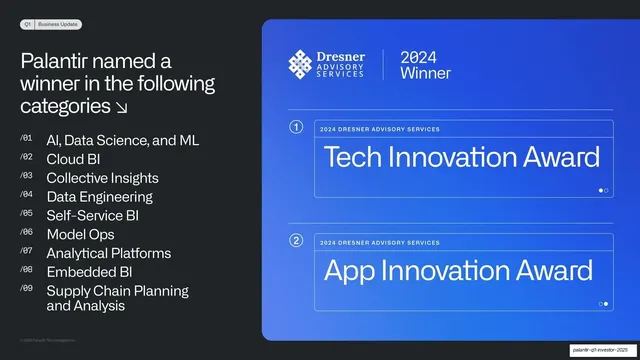 Analyst award categories with blue award panel
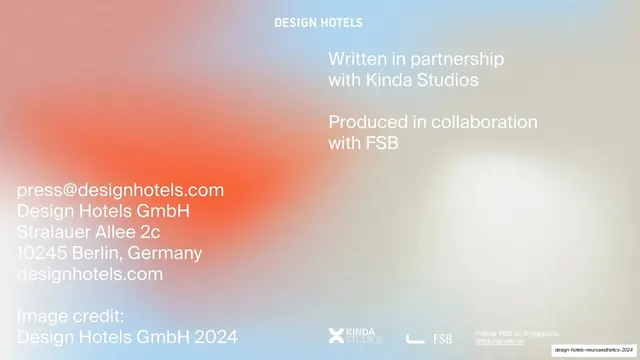 Press contact and credits closing gradient slide
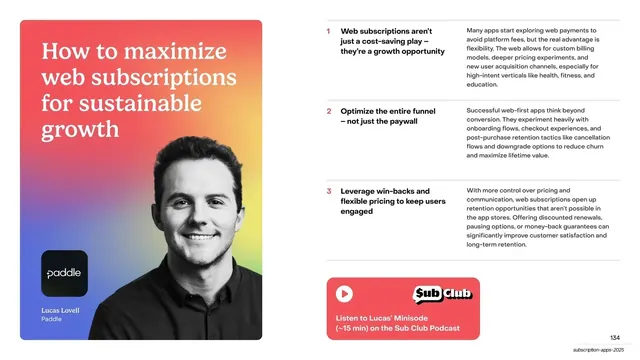 Three numbered recommendations beside podcast cover
 Figma Dev Mode and MCP Server resources slide
 Hexaware Brand Guidelines 2024
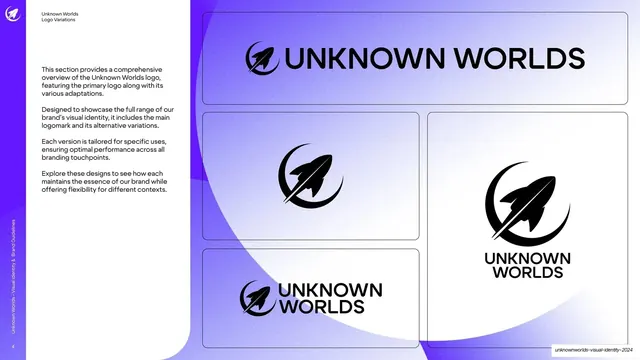 Primary logo with alternate lockups
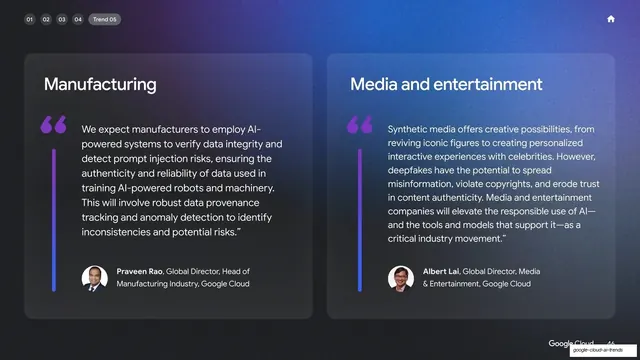 Two-up industry quotes on dark glass
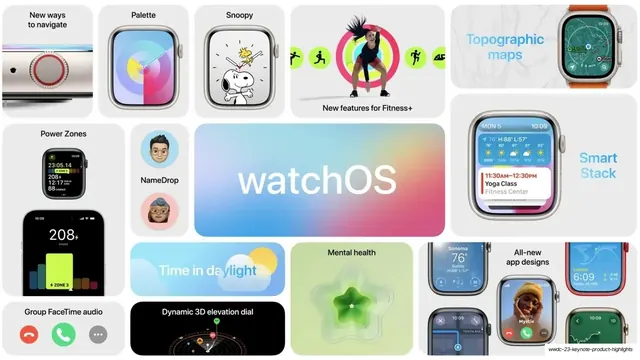 WWDC 23 Keynote Product Highlights
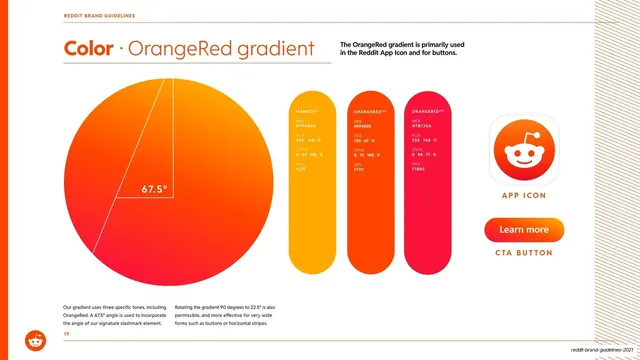 OrangeRed gradient with angle and app icon
 Superlist Pitch Deck 2023