Colour grouping rules shown as circle diagrams
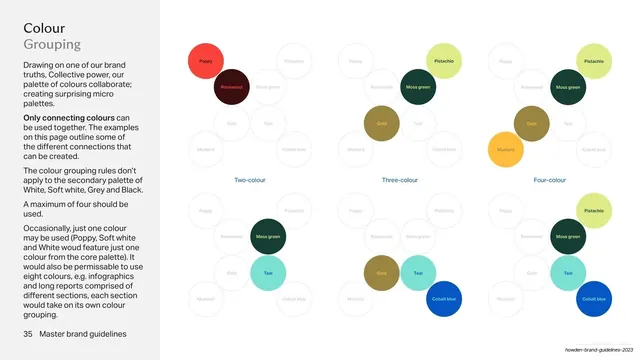
Colour grouping rules shown as six small circle diagrams that highlight which primary colours can combine in two, three, four and single-colour sets.
Summary
Colour grouping rules shown as six small circle diagrams that highlight which primary colours can combine in two, three, four and single-colour sets.
Visual description
The grey left column explains that only connecting colours can be used together, that a maximum of four should be used, and that one colour or eight colours in sections are also allowed. The right side is a grid of six mini diagrams, each a cluster of the same eight circles. Highlighted circles are full colour and the rest are faded to outlines. The top row is labelled Two-colour, Three-colour and Four-colour. The bottom row shows further pairings, such as moss green with teal and a three-colour set of gold, teal and cobalt blue.
Key takeaway
A map of neighbouring circles shows the connecting rule more clearly than text can. Faded circles make the exclusions obvious at a glance.
Reuse notes
Use wherever a colour pairing rule needs visual proof. The diagrams need redrawing if the palette changes. Two to four highlighted circles keep each diagram legible.
More like this
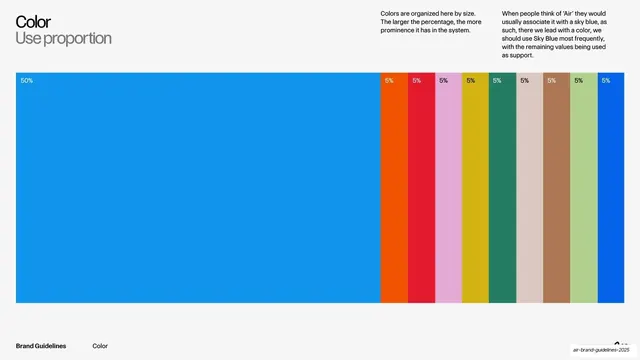 Color use proportion bar chart
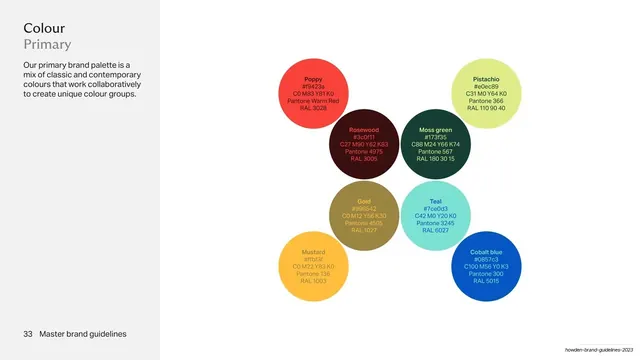 Eight primary brand colours with specifications
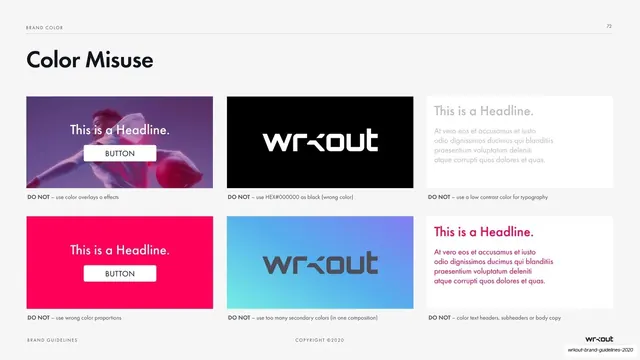 Six color misuse examples
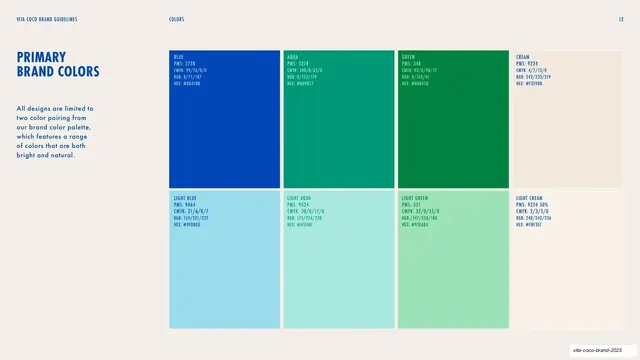 Primary brand color swatches with specs
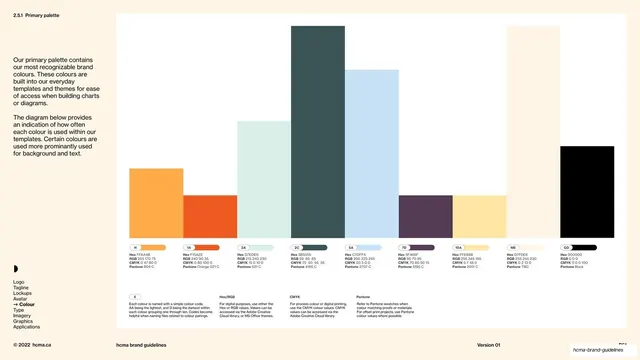 Primary palette
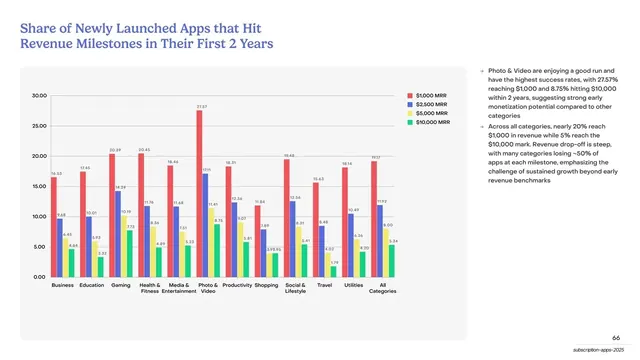 Share of new apps reaching revenue milestones
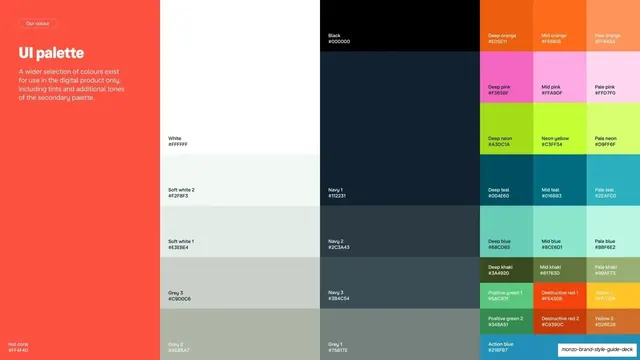 Monzo UI palette with hex codes
 Primary logo on light panel
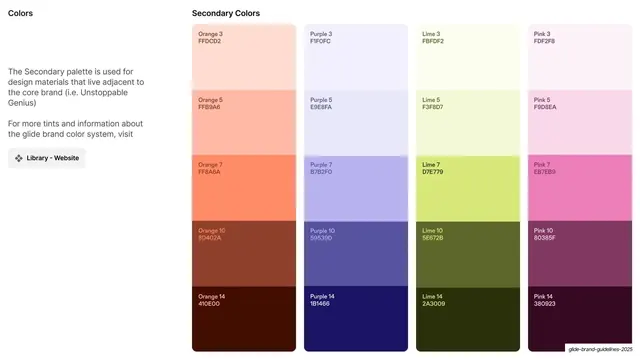 Secondary color ramps grid
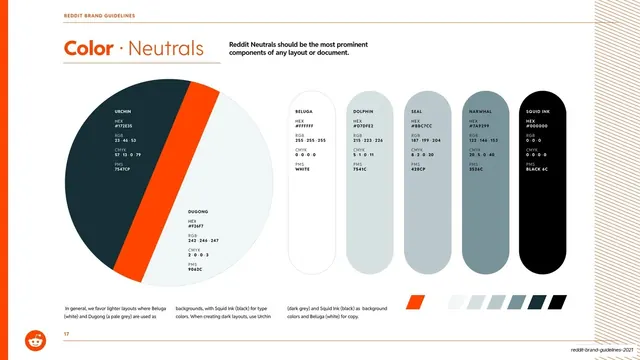 Neutral palette with pie chart and swatches
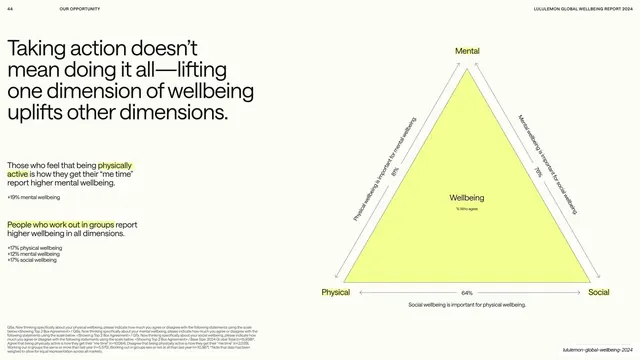 Wellbeing dimensions triangle framework
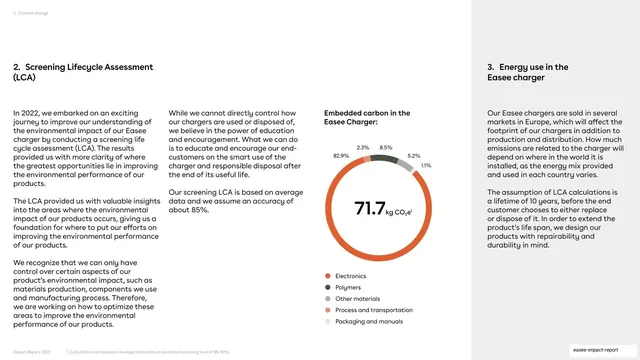 Lifecycle assessment donut with side panel
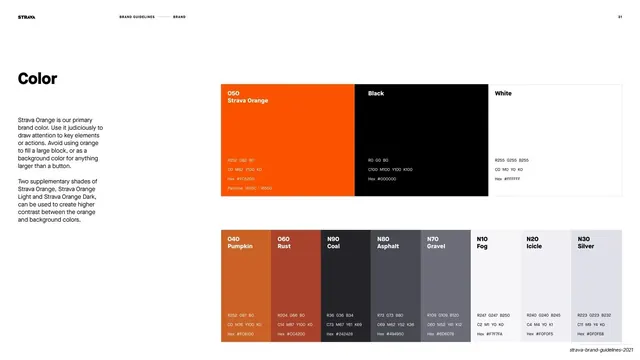 Strava Orange primary and neutral palette
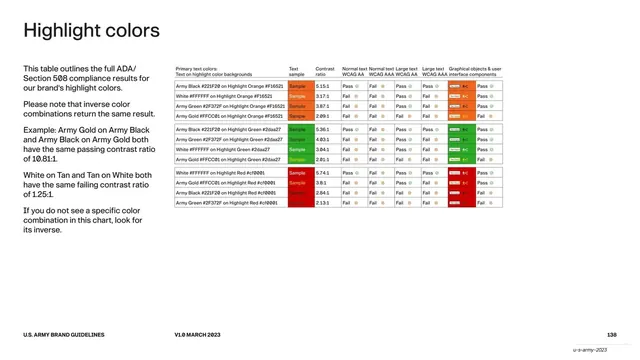 Highlight colors contrast results table
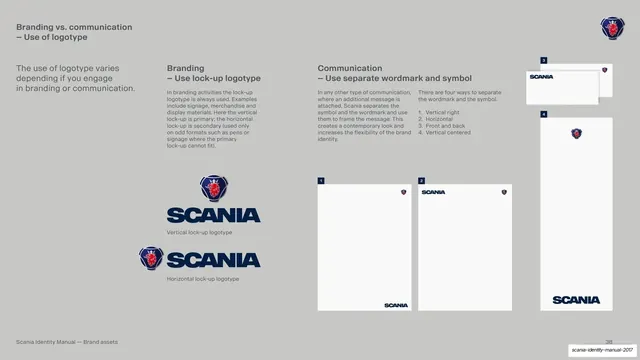 Branding versus communication logo use
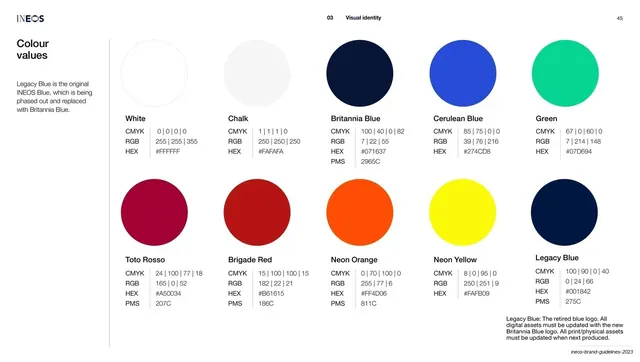 Colour values sheet with CMYK, RGB and HEX
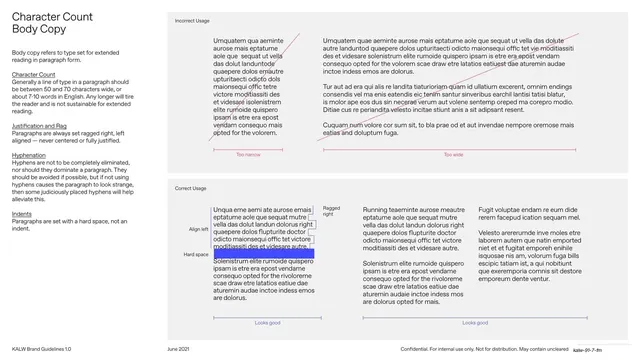 Body copy line length and rag
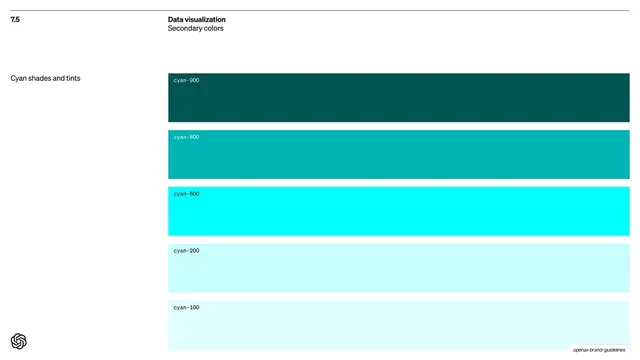 Cyan shades and tints
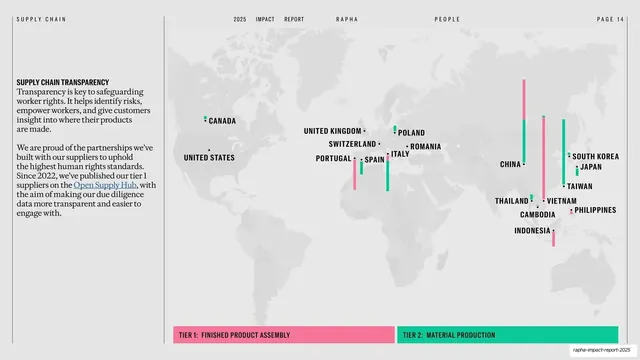 Tier 1 and tier 2 supplier map
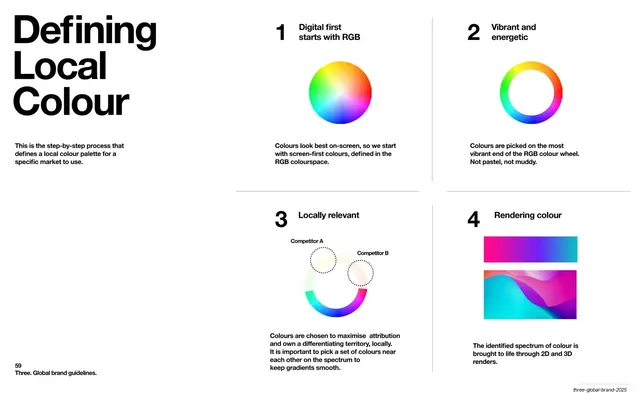 Four step process for local colour
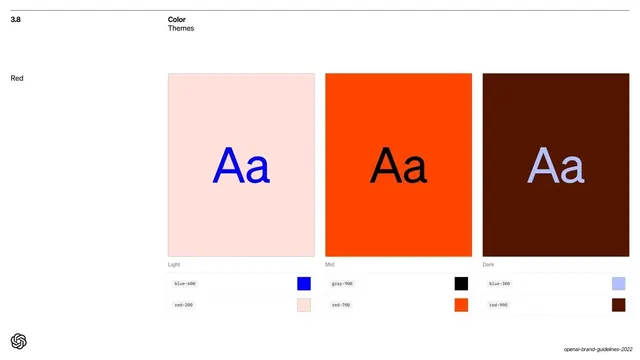 Red theme light mid dark
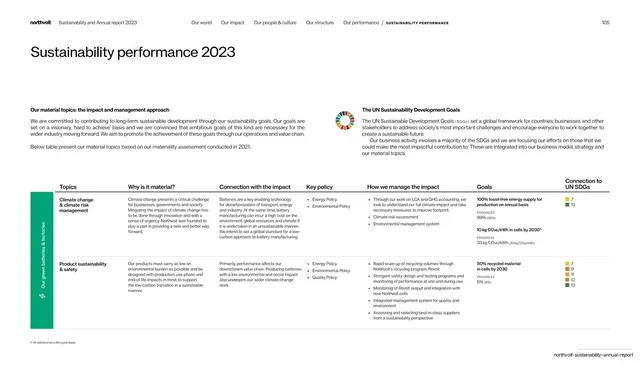 Sustainability performance material topics table
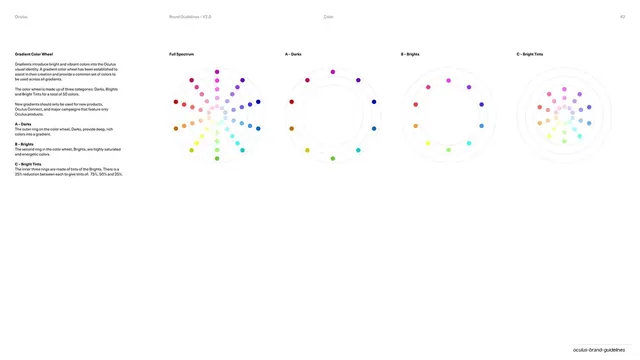 Gradient color wheel split into rings
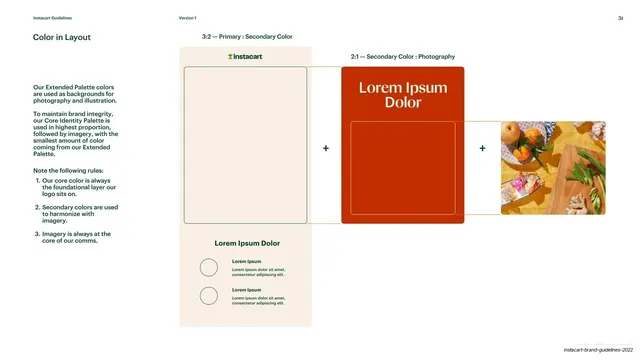 Color in layout ratios