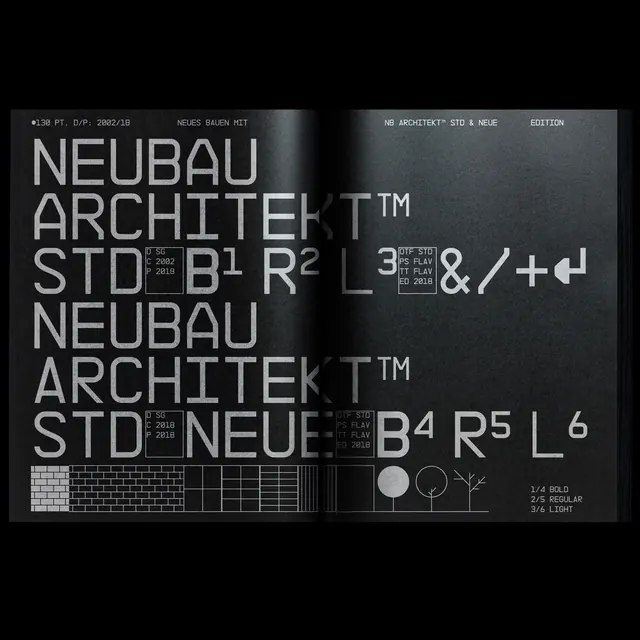
Neubau Architekt typeface specimen spread with technical details
Double-page typeface specimen for Neubau Architekt showing the font family name with technical specifications, pattern samples, and geometric symbol set on dark background.
Summary
A technical typeface specimen spread for Neubau Architekt font family presented in white and gray sans-serif on a charcoal background, featuring the typeface name repeated in various weights, along with systematic pattern samples and accompanying symbol set documentation.
Visual description
Dark two-page spread on charcoal/black background. Left and right pages both show "NEUBAU ARCHITEKT" rendered in large condensed sans-serif in multiple weights (STD, B1, R2, B4, R5, L). Smaller text includes publication details ("D SG", "P 2002/18", etc.) and variant descriptions. Lower section of both pages displays geometric pattern samples: brick patterns, grid textures, line variations, and simple symbols (circle, tree outline). A small legend in gray text indicates "1/4 BOLD," "2/5 REGULAR," "3/6 LIGHT." The entire design maintains strict typographic grid structure, recalling technical drawing documentation.
Key takeaway
Typeface as a system: by showing multiple weights, variants, and modular pattern elements, the specimen positions the typeface not as a single solution but as a flexible design toolkit. Technical documentation aesthetic (grids, weights, detailed specs) conveys precision and suitability for architecture and engineering work.
Reuse notes
Excellent model for technical or systems-focused type specimens, especially for fonts intended for professional/industrial use. The dark background and muted palette create a professional, sophisticated presentation. The inclusion of geometric patterns and symbol sets shows a complete design system rather than just letterforms. Useful for foundry branding, architecture/design discipline positioning, or modern specimen design that departs from traditional approaches. Study for understanding how documentation language and grid systems can sell a typeface's precision and versatility.
More like this
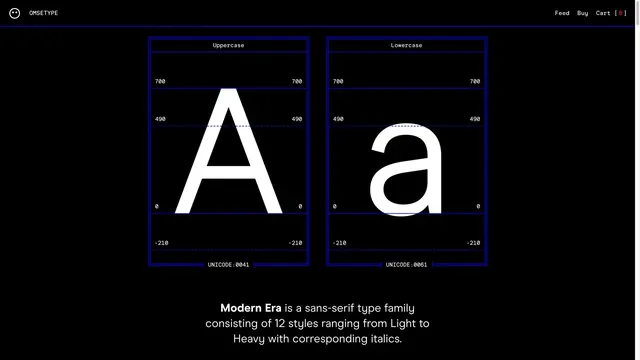 Owsetype Modern Era typeface specimen display
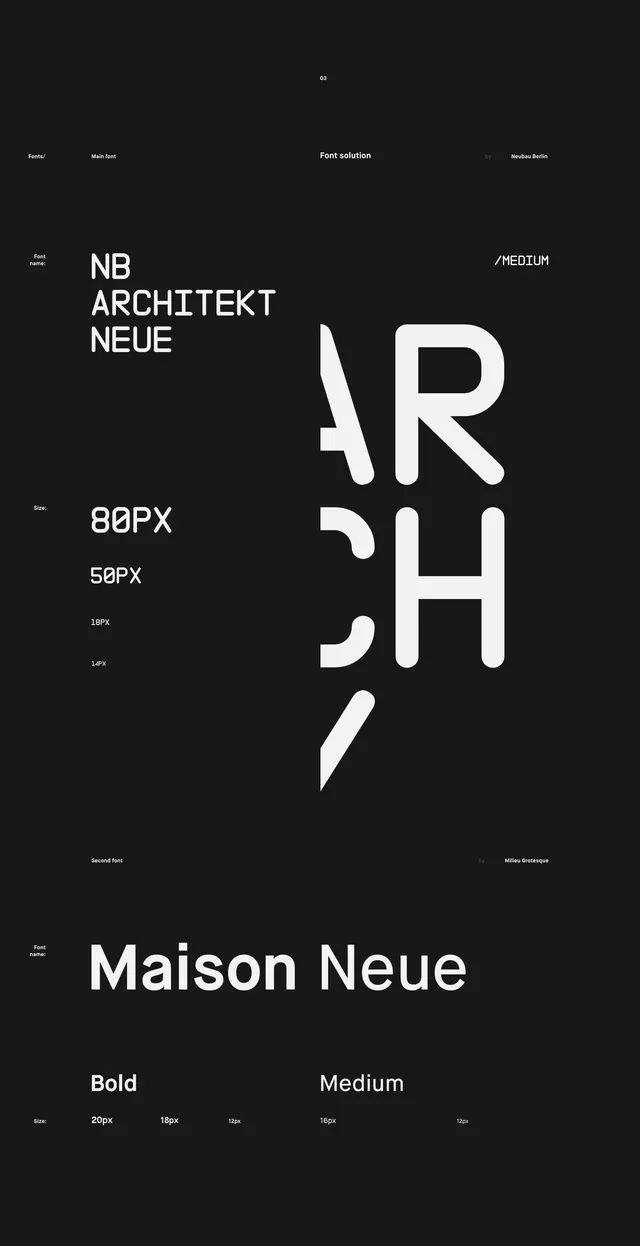 NB Architekt Neue and Maison Neue specimen
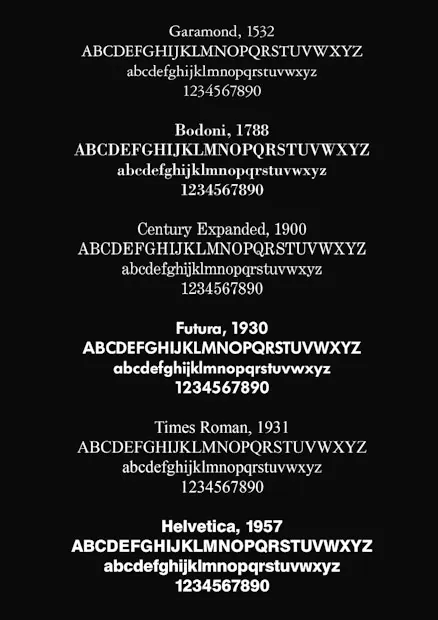 Type specimen page comparing classic typefaces
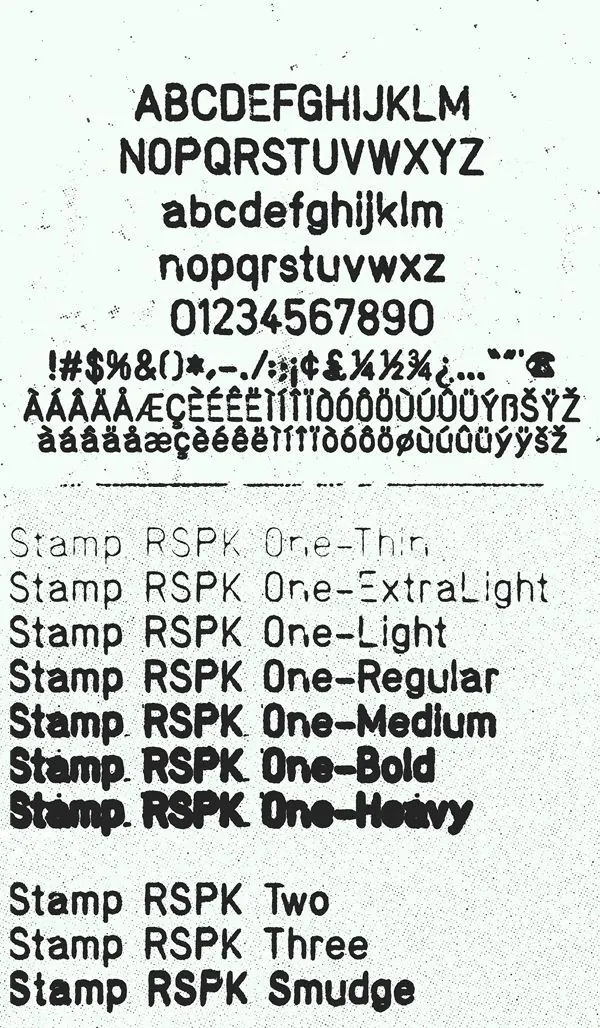 RSPK One typeface specimen sheet
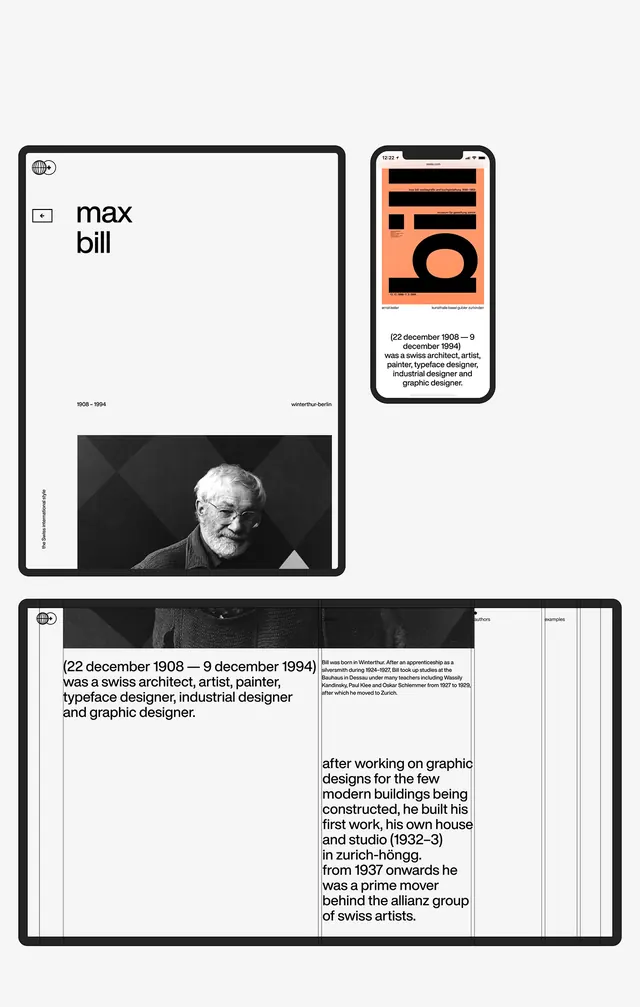 Max Bill biography: minimalist CV layout system
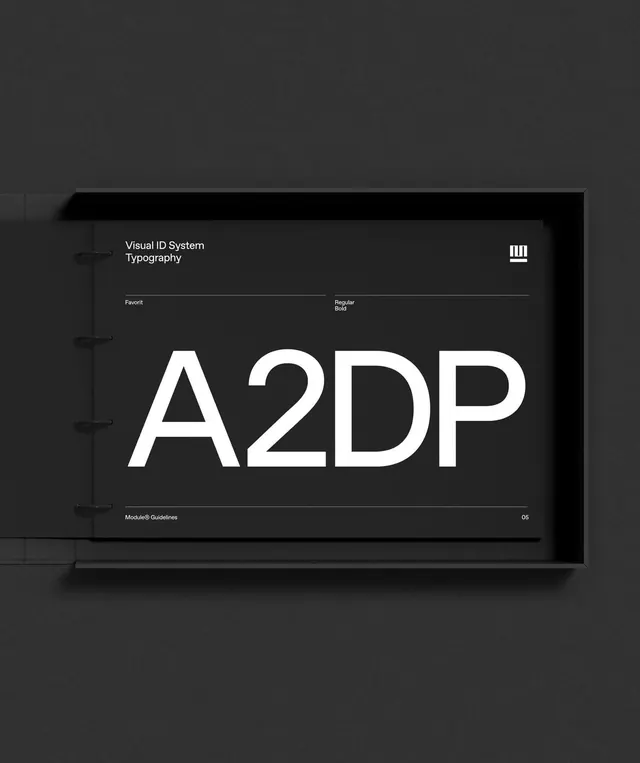 A2DP Typography System
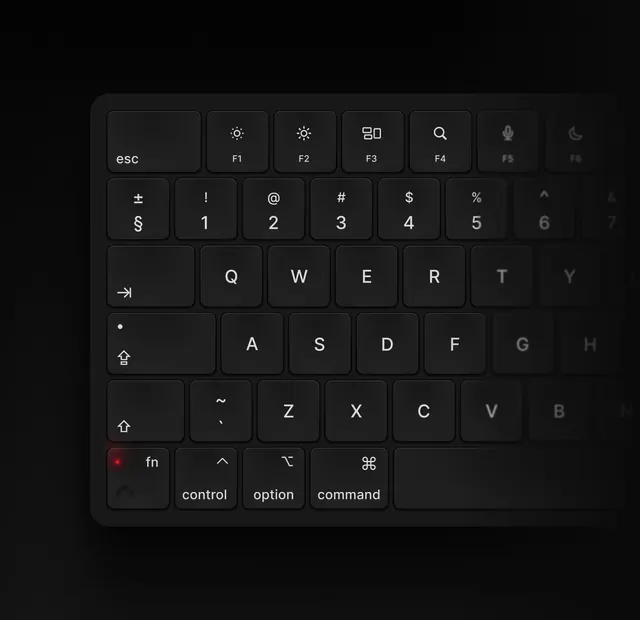 Minimal dark keyboard layout specimen
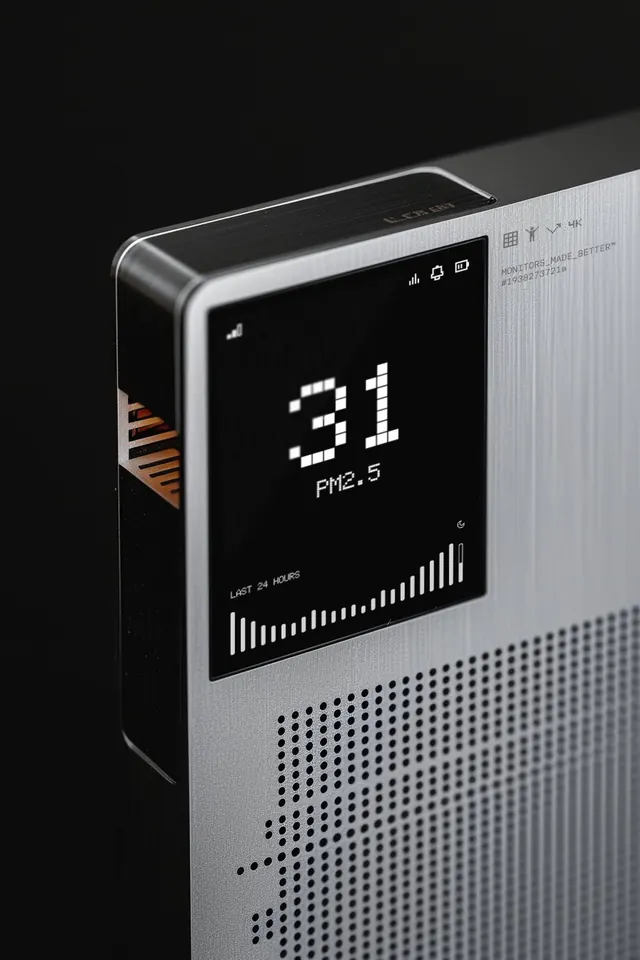 Air quality monitoring device UI mockup
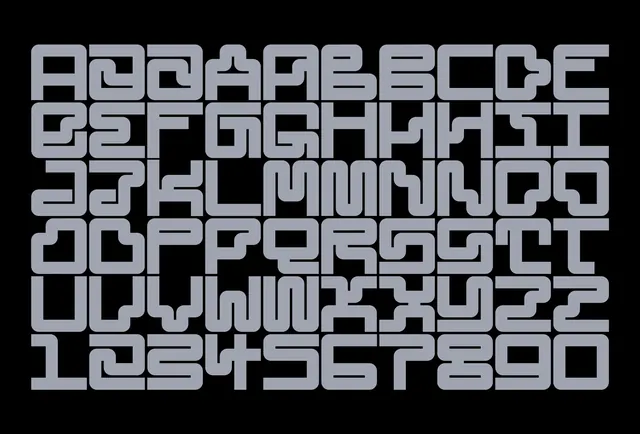 Modular pipe alphabet specimen
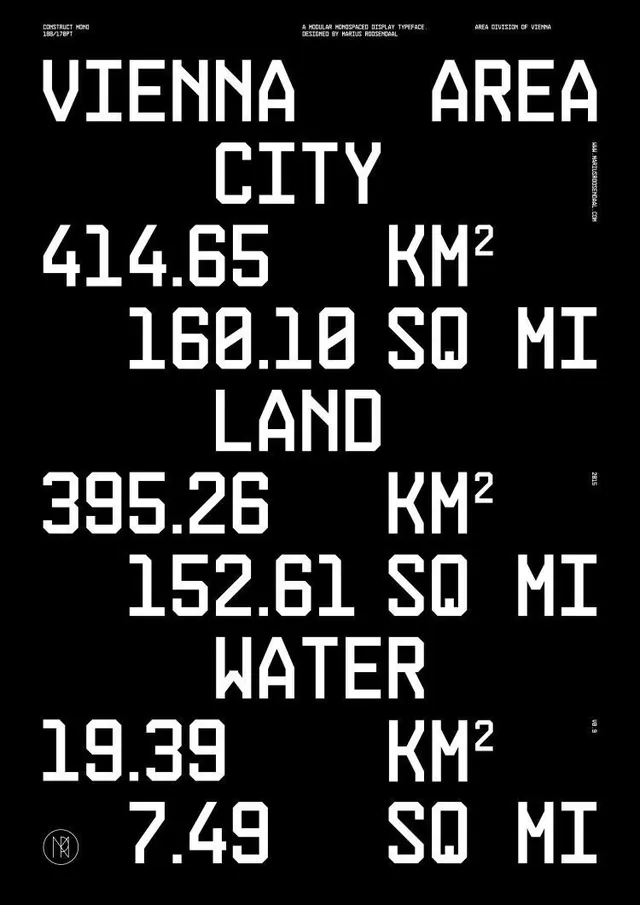 Construct Mono Vienna area type poster
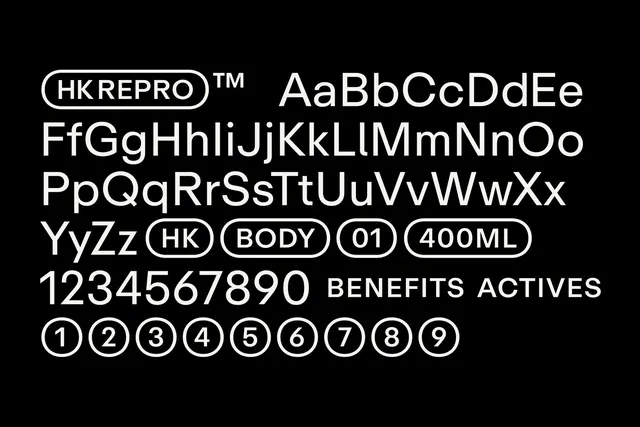 HK Repro typeface specimen
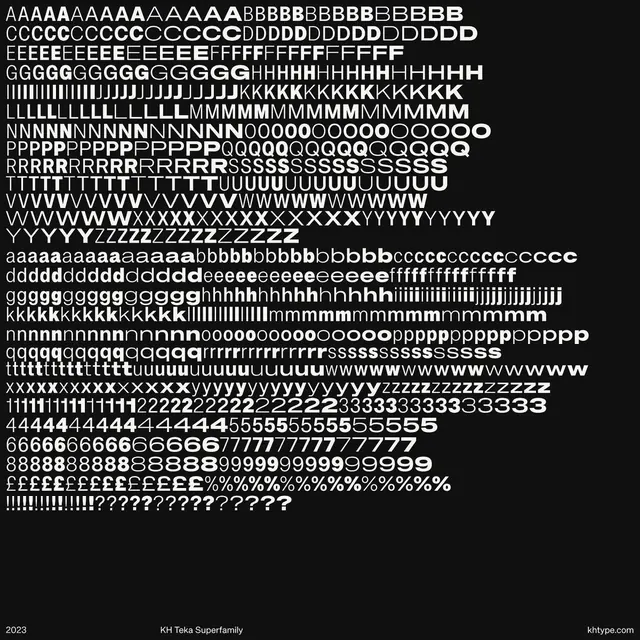 KH Teka Superfamily type specimen
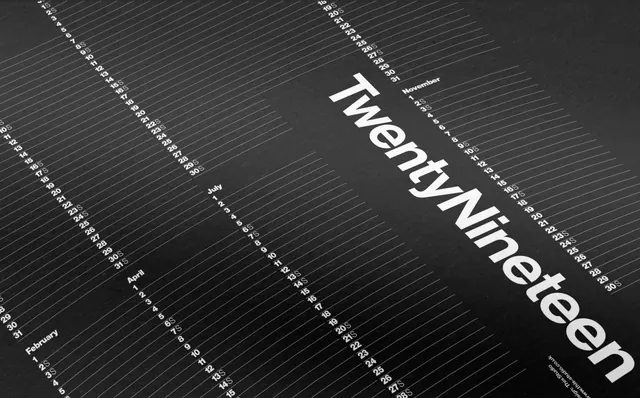 TwentyNineteen Typographic Calendar Design
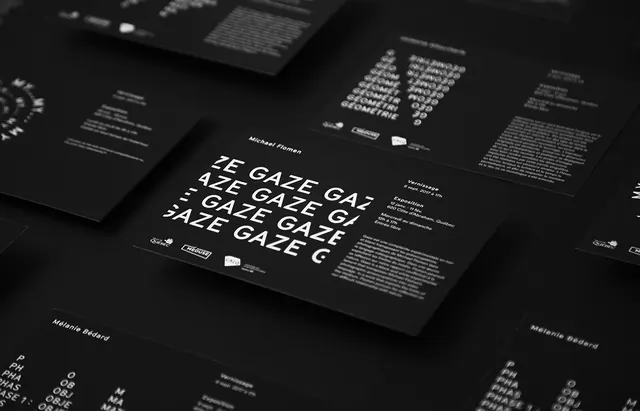 Data-Dense Typography Layout
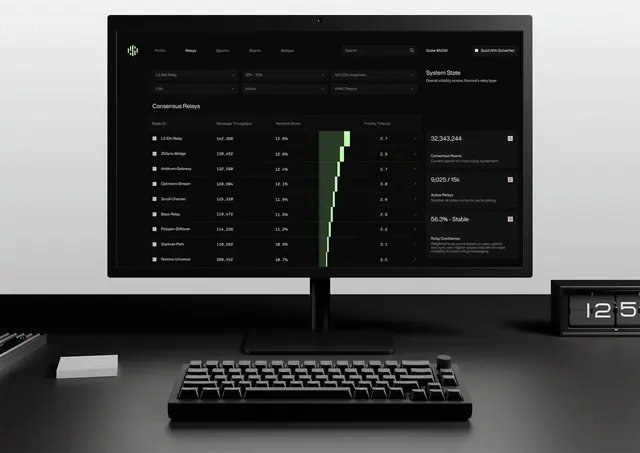 Dark-mode network relay monitoring dashboard
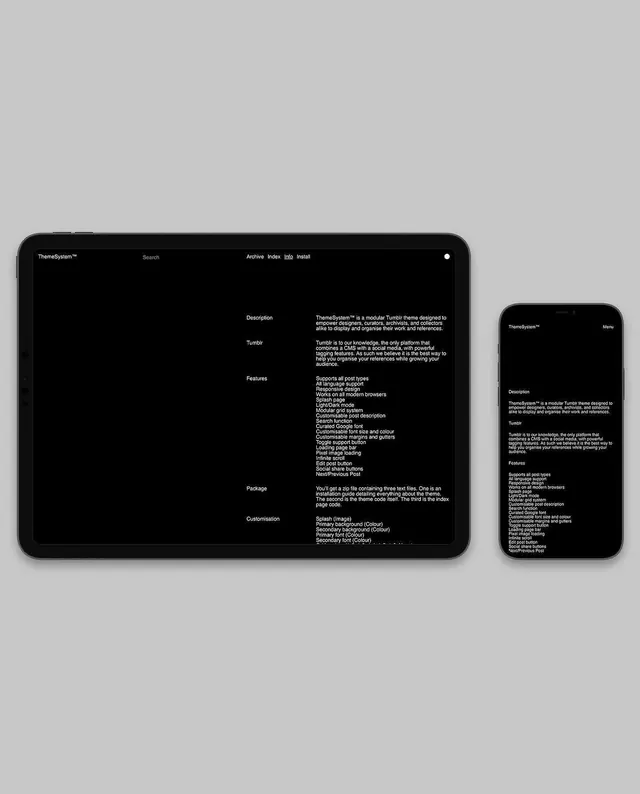 ThemeSystem Tumblr theme documentation site
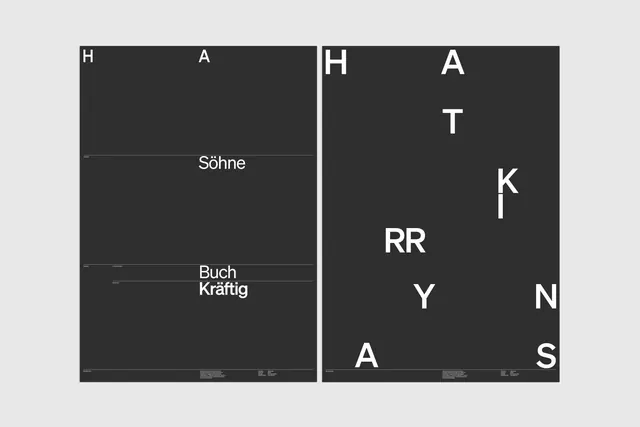 Ha Hatkrynn typographic poster diptych
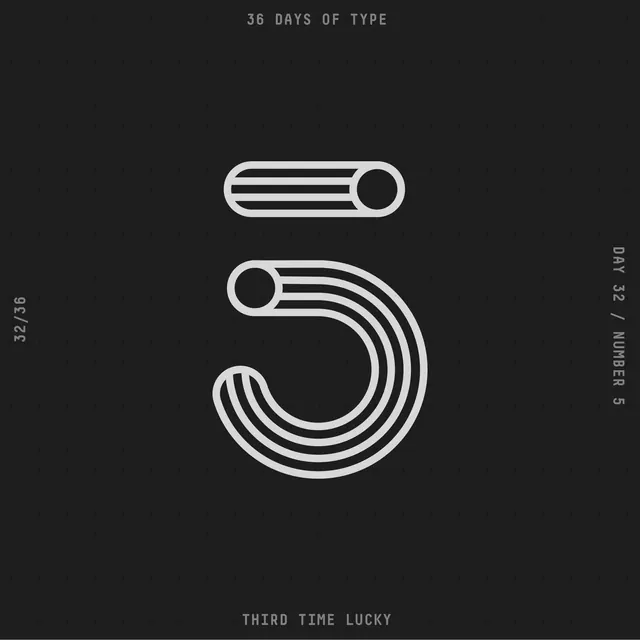 36 Days of Type - Third Time Lucky
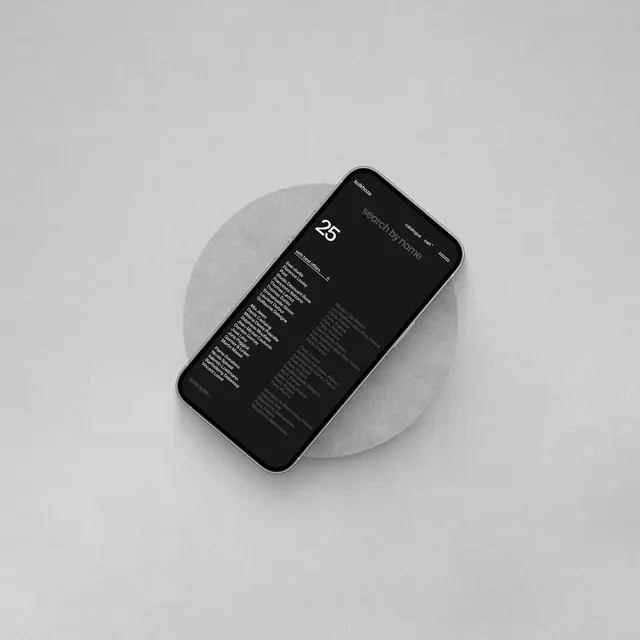 Dark Mode Mobile UI Mockup
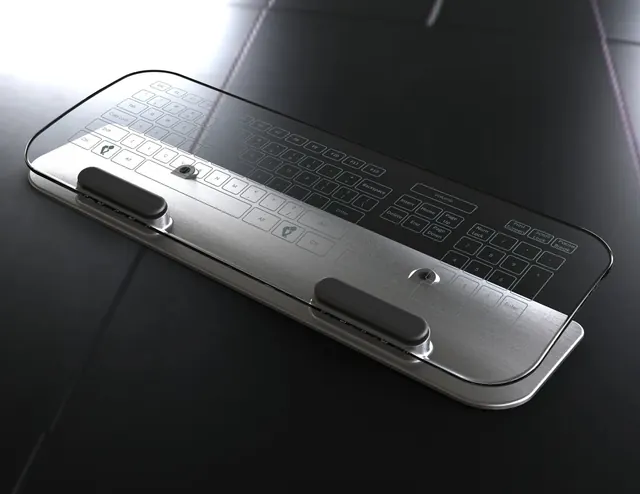 Technical Hardware Mockup
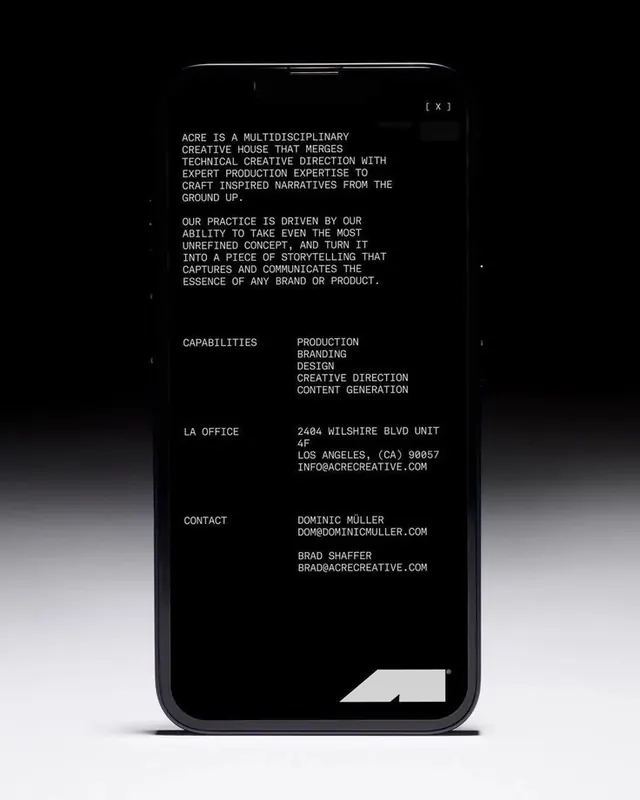 Acre Creative Mobile Mockup
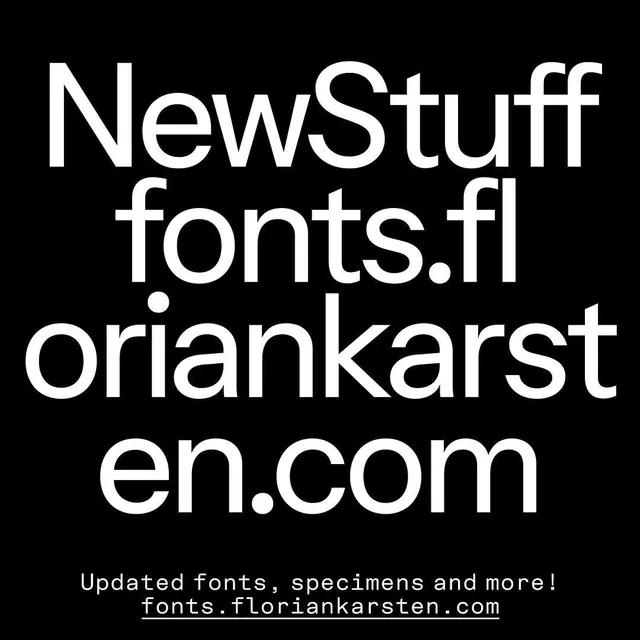 Typographic poster with font specimen and website URL
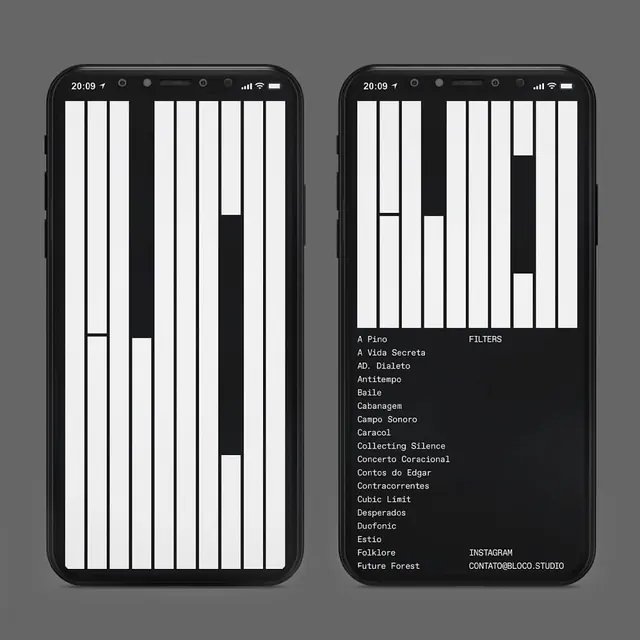 Music streaming app UI with filter visualization
 3D Render of a Futuristic Camera Module